
The Hidden Link Between Dehydration and Bad Breath
Bad breath, also known as halitosis, is a common concern that affects millions of people. While many assume it is simply caused by poor oral hygiene or certain foods, there is another factor that is often overlooked: dehydration.
Whether you've been exercising, spending time outdoors during warm weather, travelling, or simply not drinking enough water throughout the day, dehydration can reduce saliva production and create the perfect environment for odour-causing bacteria to thrive.
In this article, we'll explore the connection between dehydration and bad breath, why saliva is so important for your oral health, and what you can do to keep your breath fresh and your mouth healthy.
How Does Dehydration Cause Bad Breath?
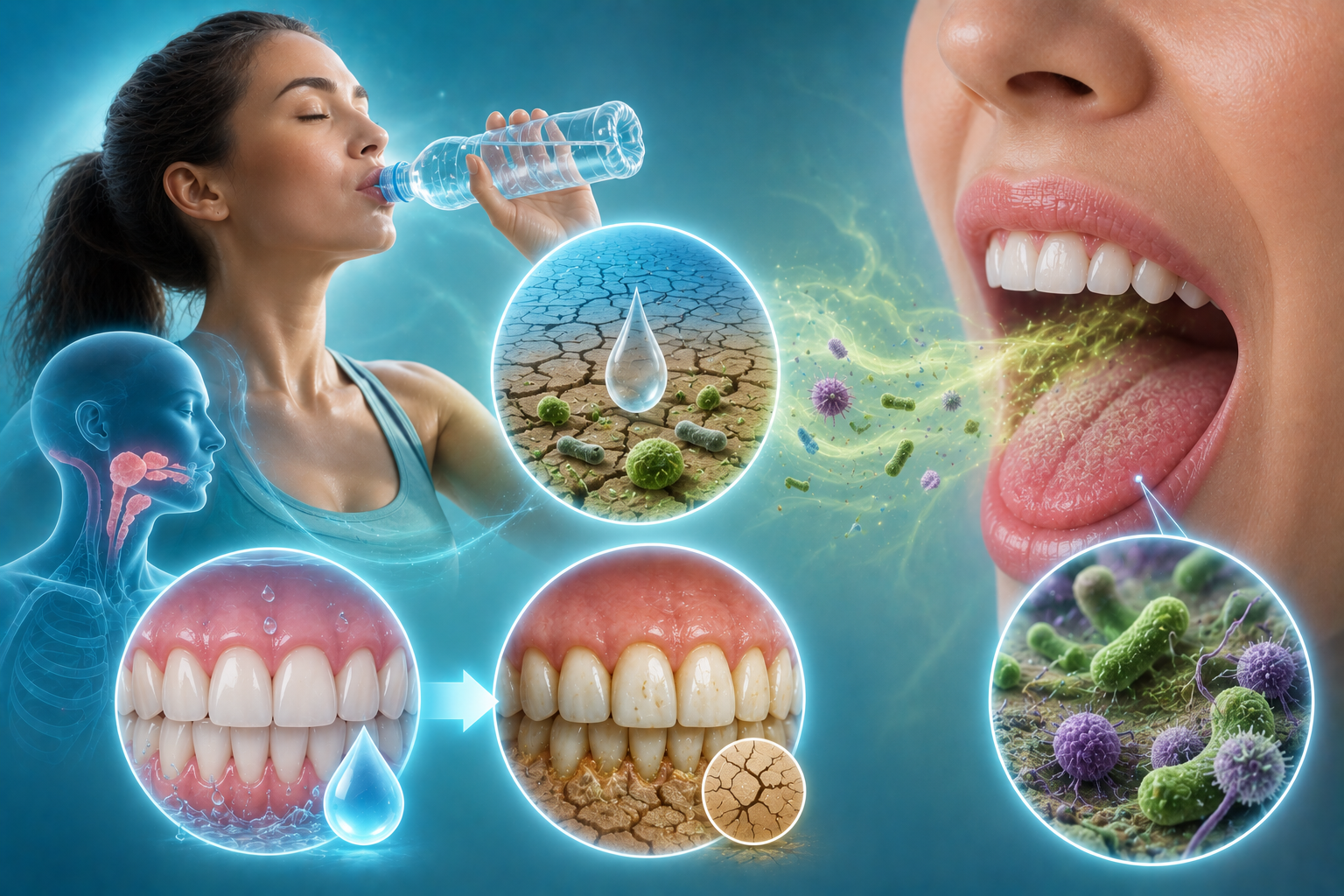
Your mouth relies on saliva to stay healthy. Saliva is much more than water—it contains minerals, enzymes and proteins that help protect your teeth and gums.
When you're dehydrated, your body produces less saliva. As a result, your mouth becomes drier, allowing bacteria to multiply more easily.
These bacteria feed on food particles and dead cells in your mouth, releasing volatile sulphur compounds (VSCs)—the unpleasant-smelling gases responsible for bad breath.
The less saliva you have, the more difficult it is for your mouth to naturally wash away bacteria and neutralise acids.
Why Is Saliva So Important?
Saliva plays a vital role in maintaining good oral health by helping to:
Wash away food particles
Neutralise acids produced by bacteria
Protect tooth enamel
Reduce plaque buildup
Keep oral tissues moist and comfortable
Support healthy digestion by beginning the breakdown of food
Without enough saliva, harmful bacteria can multiply more quickly, increasing the risk of bad breath, tooth decay and gum disease.
Signs You May Be Dehydrated
Dehydration doesn't always cause obvious symptoms at first.
Common signs include:
A dry or sticky mouth
Persistent bad breath
Feeling thirsty
Dry lips
Thick or stringy saliva
Difficulty swallowing
Dark yellow urine
Headaches or fatigue
If you regularly wake up with a dry mouth that persists throughout the day, dehydration may be contributing to your symptoms.
Other Causes of Dry Mouth
Although dehydration is one of the most common causes, reduced saliva production can also be linked to:
Certain medications
Mouth breathing, particularly during sleep
Smoking or vaping
Excessive alcohol consumption
Caffeine in large amounts
Certain medical conditions
Cancer treatments such as radiotherapy to the head and neck
If dry mouth continues despite drinking enough water, it's worth discussing the issue with your dentist or GP.
Why Warm Weather Can Make Bad Breath Worse
During warmer months, your body loses more fluid through sweating.
If you don't replace these fluids by drinking enough water, saliva production can decrease, making your mouth drier.
People may also consume more:
Coffee
Iced sugary drinks
Alcohol
Sports or energy drinks
Some of these beverages can contribute to dehydration or create conditions that encourage bacterial growth if consumed frequently.
Staying hydrated is particularly important during periods of hot weather or increased physical activity.
Can Dehydration Affect More Than Your Breath?
Yes. A dry mouth doesn't just cause unpleasant breath—it can also increase your risk of several oral health problems.
Reduced saliva can contribute to:
Tooth decay
Gum disease
Plaque buildup
Mouth ulcers
Difficulty wearing dentures comfortably
Changes in taste
Oral infections
Saliva is one of your mouth's most important natural defence systems, so keeping your body hydrated benefits both your breath and your overall oral health.
How to Prevent Dehydration-Related Bad Breath
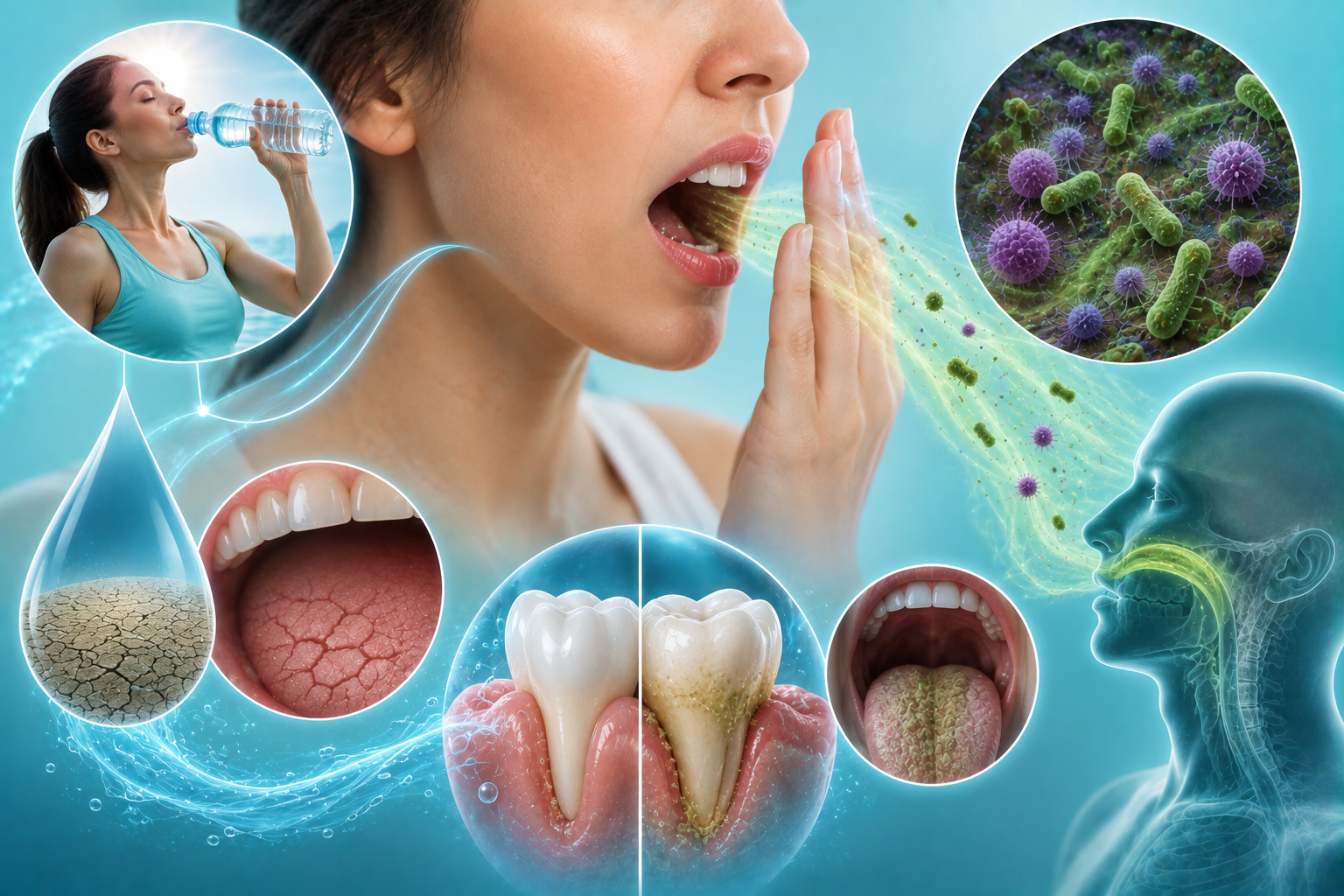
Fortunately, there are several simple ways to keep your mouth hydrated and reduce the risk of bad breath.
Drink Plenty of Water
Water is the best drink for keeping your mouth moist and supporting healthy saliva production.
Aim to drink water regularly throughout the day, especially during hot weather or after exercise.
Brush and Clean Between Your Teeth
Good oral hygiene removes the bacteria that contribute to unpleasant odours.
Remember to:
Brush twice daily with fluoride toothpaste
Clean between your teeth using floss or interdental brushes
Replace your toothbrush regularly
Don't Forget Your Tongue
Your tongue can harbour a significant number of bacteria.
Gently cleaning your tongue with a toothbrush or tongue scraper can help reduce bacteria that contribute to bad breath.
Limit Sugary Drinks
Sugary soft drinks and energy drinks feed the bacteria responsible for tooth decay and bad breath.
Choosing water more often benefits both your oral health and your overall wellbeing.
Chew Sugar-Free Gum
Sugar-free chewing gum can stimulate saliva production after meals, helping to freshen your breath and protect your teeth.
Choose gum containing xylitol where appropriate, as it may help reduce cavity-causing bacteria.
When Should You See a Dentist?
Occasional morning breath or temporary bad breath after certain foods is normal.
However, you should arrange a dental examination if:
Bad breath persists despite good oral hygiene
You frequently experience a dry mouth
Your gums bleed when brushing
You have tooth pain or sensitivity
You notice swollen gums
Your bad breath is accompanied by a bad taste in your mouth
Persistent bad breath can sometimes indicate gum disease, tooth decay or another underlying dental condition that requires treatment.
Final Thoughts
Dehydration is one of the most overlooked causes of bad breath. When your body doesn't produce enough saliva, harmful bacteria can multiply more easily, leading to unpleasant odours and increasing the risk of tooth decay and gum disease.
The good news is that staying well hydrated, maintaining excellent oral hygiene and attending regular dental check-ups can help keep your breath fresh and your smile healthy.
If bad breath persists despite these measures, don't ignore it. It could be a sign that your mouth needs professional attention.
Book Your Consultation
At Euro Dental Care, we understand that persistent bad breath can affect your confidence and may indicate an underlying oral health problem.
Our experienced dental team provides comprehensive examinations, professional hygiene treatments and personalised advice to help identify the cause of bad breath and keep your teeth and gums healthy.
Book an appointment with Euro Dental Care today and let us help you enjoy fresher breath and a healthier smile with expert, compassionate dental care.