
Dental Care Tips for Children
Healthy smiles begin in childhood. The dental habits children develop early in life play a vital role in preventing cavities, gum disease, and other oral health problems as they grow. Establishing good oral hygiene routines at a young age helps protect developing teeth and lays the foundation for strong, healthy smiles in the future.
Parents play an essential role in guiding their children towards proper dental care and creating positive experiences around brushing, healthy eating, and dental visits. With the right guidance, children can learn habits that support lifelong oral health.
In this guide, we explore why early dental care is important, how to teach children proper brushing techniques, diet tips for strong teeth, and what parents can expect during their child’s first dental visit.
Why Early Dental Care Matters
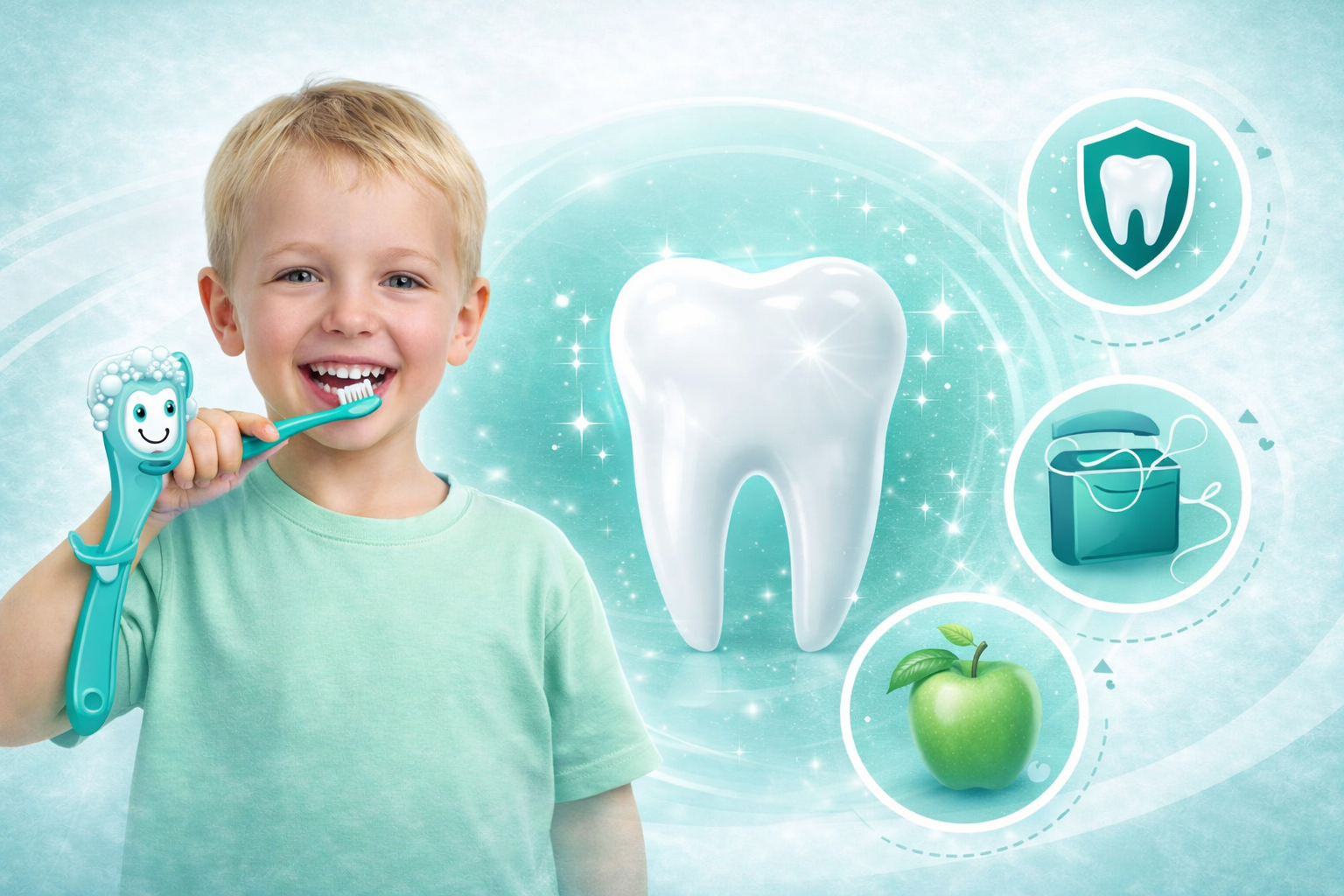
Establishing good dental care habits from an early age is essential for building a lifetime of healthy teeth and gums. Developing proper oral hygiene routines during childhood helps protect growing teeth and reduces the risk of common dental problems.
Early dental care helps children to:
- Prevent cavities and tooth decay
- Maintain healthy gums
- Avoid tooth pain and discomfort
- Develop confidence and comfort when visiting the dentist
Paediatric dental care also allows dentists to identify potential issues at an early stage, such as misaligned teeth or bite problems. Early detection often makes treatment simpler, more effective, and less invasive, helping to support healthy dental development as children grow.
How to Teach Kids Proper Brushing
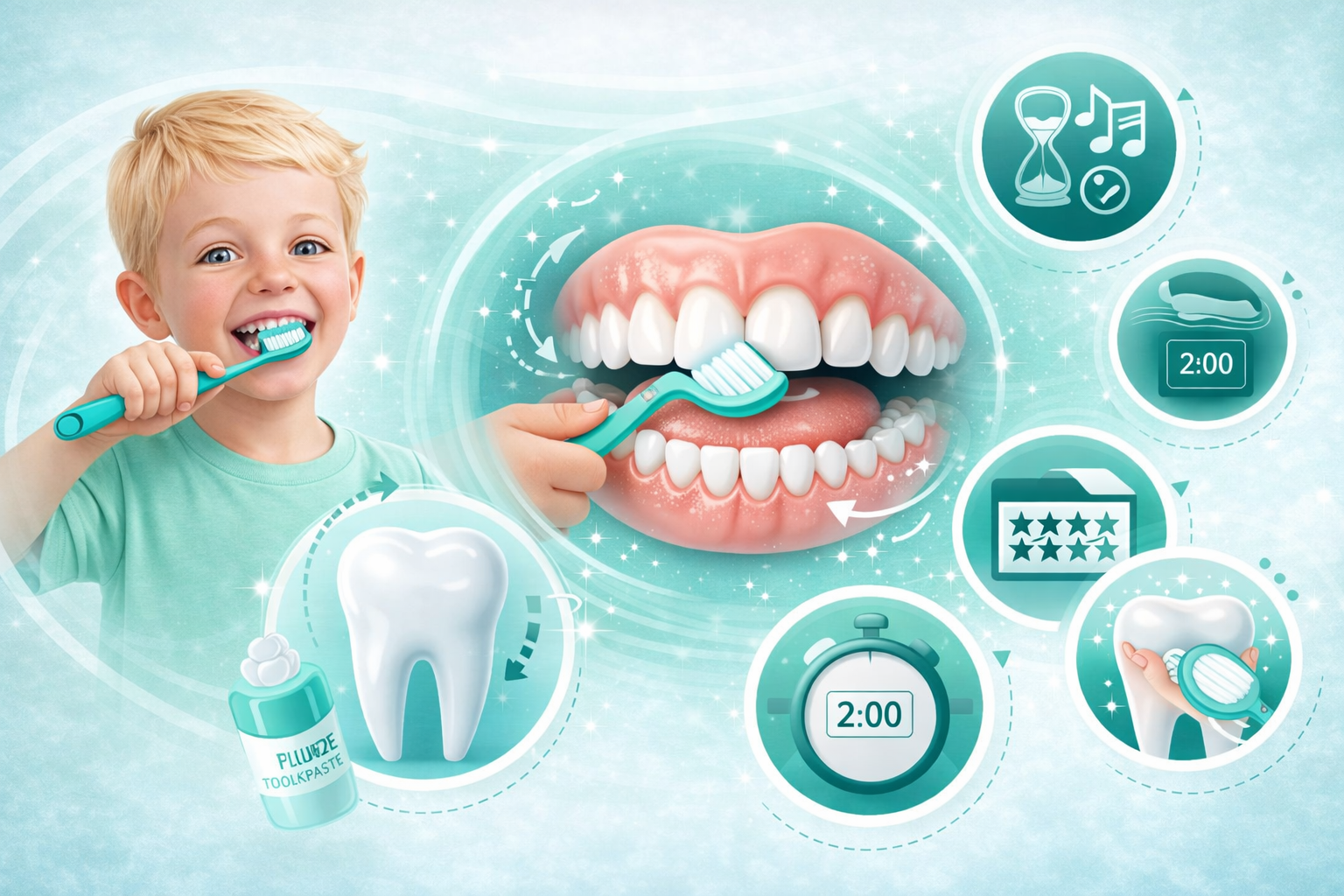
Teaching children how to brush their teeth correctly is essential for removing plaque and maintaining healthy teeth and gums. Developing good brushing habits early helps prevent cavities and supports long-term oral health.
1. Use the Right Dental Tools
Choosing the correct toothbrush and toothpaste makes brushing safer and more effective for children.
Use a soft-bristled toothbrush designed for children, suitable for smaller mouths
Apply a pea-sized amount of fluoride toothpaste for children under the age of six
Replace toothbrushes regularly to maintain effective cleaning
2. Supervise and Guide Brushing
Young children often require support to brush their teeth thoroughly.
Encourage children to brush their teeth at least twice a day, ideally in the morning and before bedtime
Parents should assist and supervise brushing until children can brush effectively on their own, usually around the age of 7 to 8
3. Make Brushing a Fun Routine
Creating a positive experience helps children develop consistent oral hygiene habits.
Use songs or timers to encourage brushing for the recommended two minutes
Introduce reward systems or colourful toothbrushes to motivate regular brushing
4. Teach Proper Brushing Technique
Correct technique ensures that all areas of the teeth are cleaned properly.
Use gentle circular motions when brushing
Clean all tooth surfaces, including the front, back, and chewing surfaces
Encourage children to brush their tongue to help reduce bacteria and maintain fresh breath
Consistency is key when teaching children good oral hygiene. By establishing proper brushing habits early, parents can help their children develop lifelong routines that support strong teeth and healthy gums.
Diet Tips for Strong Teeth in Children
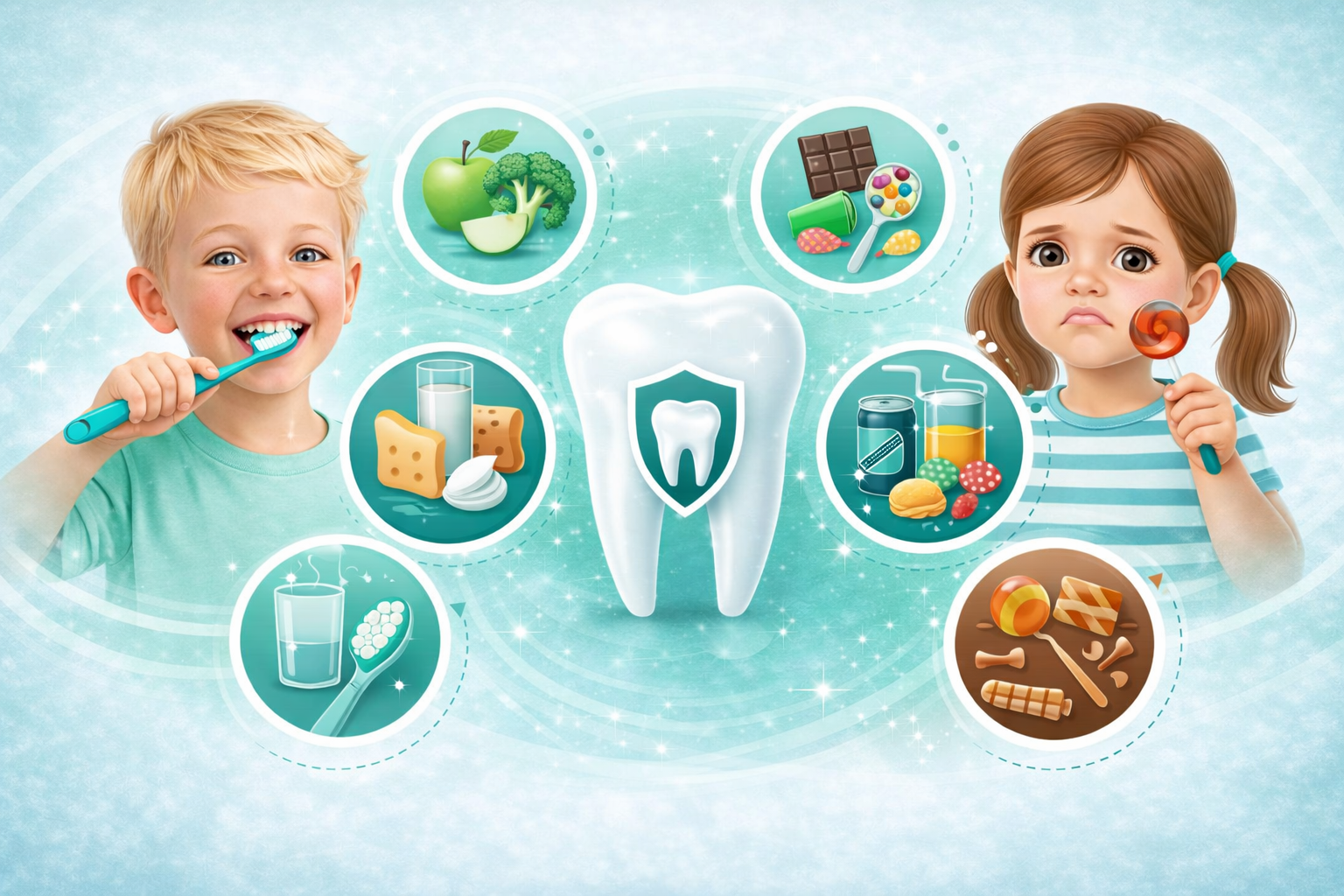
A balanced diet plays an important role in maintaining healthy teeth and gums in children. The foods children eat can either support strong tooth enamel or increase the risk of cavities and tooth decay. Choosing tooth-friendly foods helps strengthen enamel and promotes better overall oral health.
Recommended Foods for Healthy Teeth
Encouraging children to eat nutrient-rich foods can help protect their developing teeth.
- Fruits and vegetables, which are rich in vitamins and fibre and help stimulate saliva production
- Dairy products, such as milk, cheese, and yoghurt, which provide calcium and support strong tooth enamel
- Whole grains and nuts, which contain essential minerals that contribute to dental health
- Water instead of sugary drinks, as water helps rinse away food particles and bacteria
Foods to Limit
Some foods can increase the risk of tooth decay when consumed frequently.
- Candy, sweets, and chocolate, which contain high levels of sugar
- Sugary drinks, including fizzy drinks and fruit juices
- Sticky or chewy snacks, which tend to remain on the teeth and feed harmful bacteria
Developing healthy eating habits alongside proper brushing and regular dental care helps reduce the risk of cavities and supports strong, healthy teeth as children grow.
Preparing for Your Child’s First Dental Visit
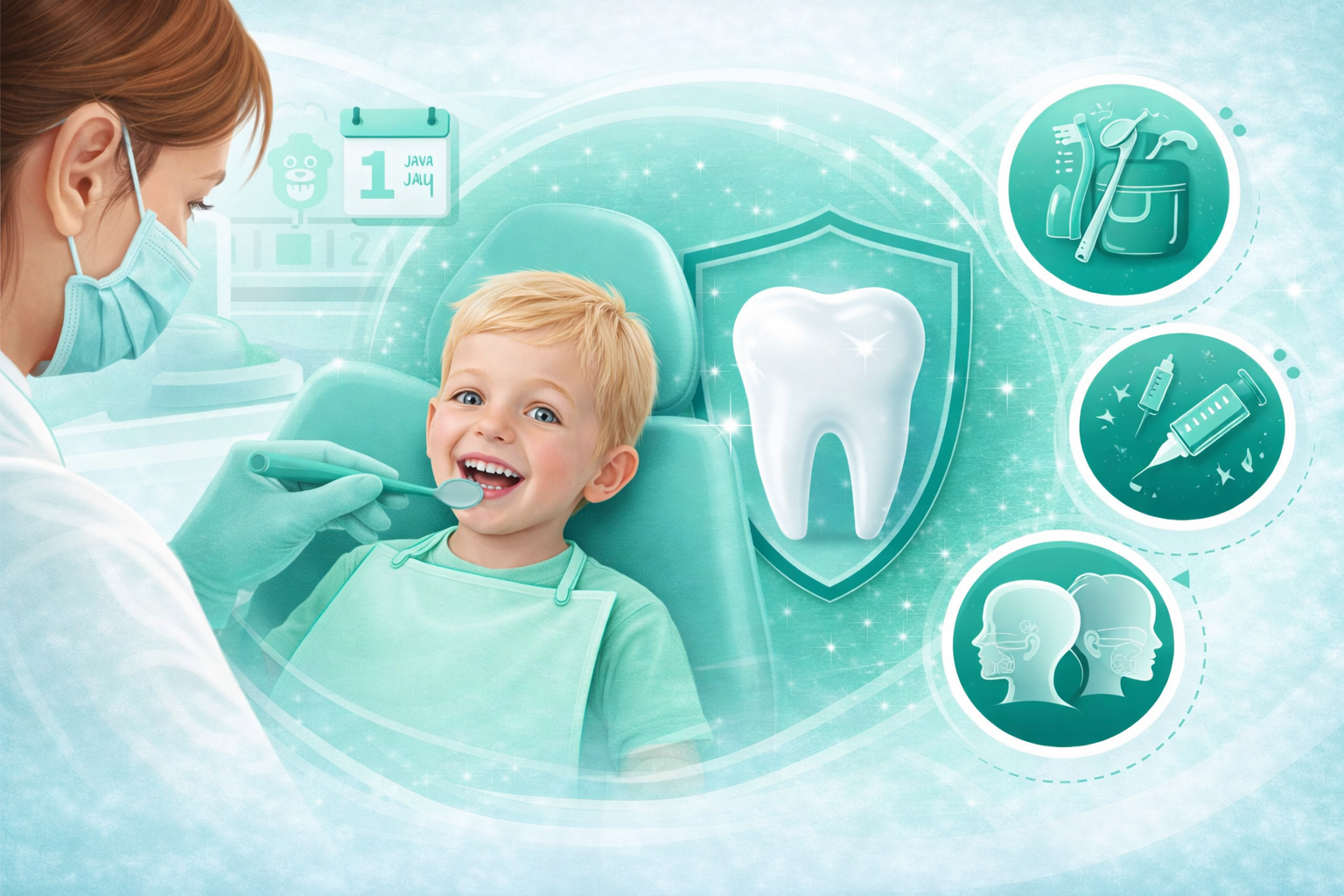
A child’s first dental visit is an important milestone in building positive attitudes towards dental care. Most dentists recommend scheduling a child’s first dental appointment by their first birthday or when the first tooth appears. Early dental visits help ensure that a child’s teeth and gums are developing properly and allow parents to receive guidance on maintaining good oral hygiene at home.
What to Expect During the First Dental Visit
During the appointment, the dentist will typically provide a gentle and child-friendly examination, which may include:
- A careful examination of the teeth, gums, and mouth to assess early dental development
- Advice for parents on proper brushing, flossing, and healthy dietary habits for children
- Fluoride treatment, when appropriate, to help strengthen developing teeth
- A discussion about dental growth, bite development, and future dental milestones
Creating positive experiences during early dental visits helps reduce dental anxiety and build confidence, encouraging children to develop healthy oral care habits that can last a lifetime.
Build Healthy Dental Habits Early
Establishing good oral hygiene habits early in life is essential for maintaining healthy teeth and gums in children. Consistent brushing and flossing, combined with a balanced diet and regular dental check-ups, help protect developing teeth and support long-term oral health.
Early education and preventive dental care play a crucial role in reducing the risk of cavities, gum disease, and other common dental problems. By introducing children to positive dental experiences from a young age, parents can help build confidence in dental visits and encourage lifelong habits that promote a healthy, confident smile.
Frequently Asked Questions
-
You should begin brushing your child’s teeth as soon as the first tooth appears, which typically occurs around six months of age. Use a soft-bristled toothbrush designed for infants and a small amount of fluoride toothpaste. Establishing brushing habits early helps prevent plaque build-up and supports healthy tooth development.
-
Children should generally visit the dentist every six months for routine dental check-ups and preventive care. Regular visits allow the dentist to monitor dental development and detect early signs of cavities or other oral health concerns. Your dentist may recommend more frequent visits depending on your child’s specific needs.
-
Yes, baby teeth play a crucial role in a child’s dental development. They help guide permanent teeth into the correct position, support proper chewing and speech development, and maintain the necessary space for adult teeth. Protecting baby teeth helps prevent alignment issues and other dental problems later in life.
-
Introduce flossing gradually and make it part of your child’s daily oral hygiene routine. Using colourful flossers designed for children or turning flossing into a fun activity can help encourage participation. Parents should supervise and assist with flossing until children develop the coordination to floss effectively on their own.
-
To reduce the risk of tooth decay, it is important to limit foods and drinks that are high in sugar or that easily stick to the teeth, including:
Sugary snacks and sweets
Sticky confectionery
Fizzy drinks and sweetened beverages
Encourage healthier alternatives such as water, fresh fruits, vegetables, and dairy products, which support strong teeth and healthy gums.
-
Creating positive dental experiences can help reduce anxiety and encourage lifelong oral care habits. Parents can help by:
Choosing a dentist experienced in providing child-friendly dental care
Explaining the dental visit in simple and reassuring terms
Bringing a favourite toy or comfort item to the appointment
Remaining calm and positive, as children often mirror their parents’ emotions
Regular dental visits, combined with good oral hygiene habits and a balanced diet, help children develop strong teeth and healthy smiles that last a lifetime.
Book Your Child’s Dental Visit Today
Give your child the best start for a healthy smile. Early dental care helps children develop strong teeth, healthy gums, and positive habits that last a lifetime.
Our friendly dental team provides gentle check-ups, hygienist cleanings, and preventive dental care to support your child’s oral health and make every visit comfortable and reassuring.
Book your child’s dental appointment today and help them build healthy habits for a lifetime of confident smiles.