
Everything You Need to Know About Dental Implants
Missing teeth can affect your confidence, chewing ability, and overall oral health. If you are exploring long-term tooth replacement options, dental implants are widely considered one of the most reliable and natural-looking solutions available today.
In this guide, we explain:
What dental implants are
How dental implants compare to dentures
What the dental implant procedure involves
What recovery is like
How long dental implants last
Understanding these factors can help you decide whether dental implants are the right solution for restoring your smile.
What Are Dental Implants?
Dental implants are artificial tooth roots designed to replace missing teeth and restore normal oral function. Made from biocompatible titanium, dental implants are surgically placed into the jawbone, where they fuse with the bone to create a stable and long-lasting foundation for replacement teeth. They can support a dental crown, dental bridge, or implant-supported denture, depending on the patient’s needs.
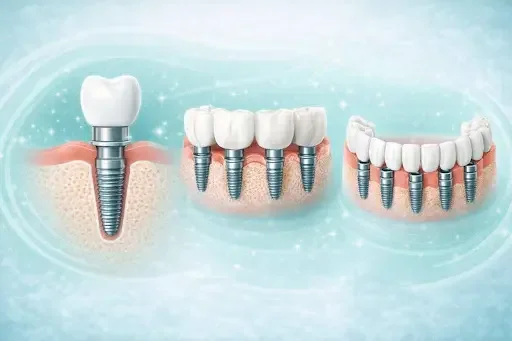
A complete dental implant consists of three parts:
The implant post
This titanium screw replaces the natural tooth root.
The abutment
A connector that attaches the implant to the final restoration.
The dental crown
A custom-made tooth that restores the appearance and function of the missing tooth.
Dental implants are designed to look, feel, and function like natural teeth, making them one of the most advanced tooth replacement solutions in modern dentistry.
Dental Implants vs Dentures: What Is the Difference?
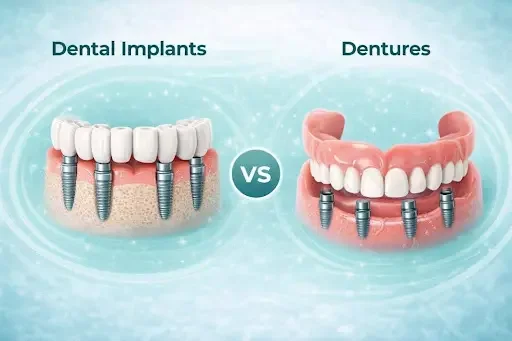
Many patients researching tooth replacement compare dental implants vs dentures. While both treatments can restore your smile, dental implants often provide greater stability, comfort, and long-term oral health benefits.
Make it stand out
Whatever it is, the way you tell your story online can make all the difference.
Stability and Comfort
Dental implants are permanently fixed in the jawbone and do not shift or slip while eating or speaking.
Dentures sit on top of the gums and may sometimes move, which can affect comfort and confidence.
Bone Preservation
Dental implants stimulate the jawbone, helping prevent bone loss after tooth extraction.
Traditional dentures do not provide this stimulation, which may lead to gradual bone shrinkage over time.
Appearance
Dental implants closely mimic the appearance of natural teeth in both shape and colour.
Dentures can look natural, but may sometimes change in fit and appearance as the jawbone changes.
Maintenance
Dental implants are maintained just like natural teeth through brushing, flossing, and regular dental visits.
Dentures require removal for cleaning and may need periodic adjustments.
For many patients seeking a permanent and stable solution, dental implants offer significant long-term advantages.
What Are the Stages of the Dental Implant Procedure?
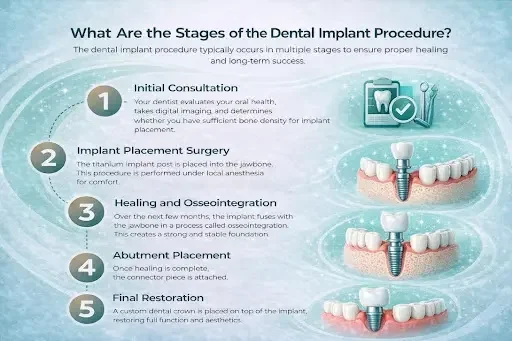
The dental implant process typically takes place over several stages to ensure proper healing and long-term success.
1. Initial Consultation
Your dentist will assess your oral health, take digital scans or X-rays, and evaluate whether you have sufficient jawbone density to support implants.
2. Implant Placement Surgery
The titanium implant post is carefully placed into the jawbone under local anaesthesia, ensuring a comfortable procedure.
3. Healing and Osseointegration
Over the following months, the implant gradually fuses with the jawbone in a process known as osseointegration. This creates a strong and stable foundation for the final restoration.
4. Abutment Placement
Once healing is complete, the abutment (connector piece) is attached.
5. Final Restoration
A custom dental crown is placed on the implant, restoring full function and aesthetics.
Make it stand out
Whatever it is, the way you tell your story online can make all the difference.
What Is Dental Implant Recovery Like?
Most patients experience mild swelling or discomfort after implant placement, which typically subsides within a few days.
Your dentist may recommend:
Eating soft foods during the first few days
Avoiding strenuous physical activity
Maintaining excellent oral hygiene
Attending follow-up appointments
Healing time varies depending on individual factors such as bone quality, overall health, and the number of implants placed.
Following your dentist’s post-operative instructions carefully helps ensure a smooth recovery.
How Long Do Dental Implants Last?
One of the biggest advantages of dental implants is their long-term durability.
With proper care and regular dental visits, dental implants can last 20 years or more, and in many cases they can last a lifetime.
Factors that influence implant longevity include:
Maintaining good oral hygiene
Attending regular dental check-ups
Avoiding smoking
Overall health and bone condition
Because of their durability, dental implants are considered one of the most cost-effective tooth replacement options in the long term.
Are Dental Implants Right for You?
You may be a good candidate for dental implants if you:
Have one or more missing teeth
Have healthy gums
Have sufficient jawbone density
Do not smoke or are willing to quit
Want a long-lasting tooth replacement solution
A professional consultation is necessary to determine whether dental implants are suitable for your individual needs.
Restore Your Smile with Confidence
Dental implants offer a permanent, stable, and natural-looking solution for missing teeth.
Compared with dentures, implants can provide:
Improved comfort
Stronger chewing ability
Long-term jawbone preservation
Greater confidence when speaking and smiling
If you are looking for a reliable way to restore your smile and protect your oral health, dental implants may be the ideal solution.
Frequently Asked Questions (FAQs)
-
Most patients report that implant surgery is less uncomfortable than a tooth extraction. Local anaesthesia ensures comfort during the procedure.
-
The full process usually takes 3–6 months, depending on healing time and treatment complexity.
-
Yes. Dental implants have a success rate above 95% in healthy patients when placed by experienced dentists.
-
Implant failure is rare but may occur due to factors such as smoking, poor oral hygiene, or certain medical conditions.
-
For many patients, implants offer greater stability, comfort, and long-term value compared to removable dentures.
-
Coverage varies by provider. A consultation helps determine your available benefits and financing options.
Book Your Implant Consultation
Take the first step toward restoring your smile.
Schedule a dental implant consultation to learn whether implants are the right option for replacing missing teeth and improving your oral health.
Your dentist will assess your needs and create a personalised treatment plan designed to restore your confidence and smile.