
Veneers vs Composite Bonding
A beautiful smile can make a lasting impression and boost your confidence. If you are considering cosmetic dentistry to enhance the appearance of your teeth, you may be comparing veneers vs composite bonding as potential treatment options. Both procedures are widely used to improve issues such as chipped, stained, uneven, or slightly misaligned teeth, helping patients achieve a brighter and more balanced smile.
While veneers and composite bonding can deliver excellent cosmetic results, they differ in several important aspects, including the materials used, treatment process, durability, cost, and long-term maintenance. Understanding these differences is essential when deciding which cosmetic dental treatment is best suited to your smile goals.
In this guide, we explore the key differences between dental veneers and composite bonding, helping you determine the most suitable option for enhancing your smile while considering your aesthetic preferences and budget.
What Are Dental Veneers?
Dental veneers are a popular cosmetic dentistry treatment designed to enhance the appearance of your smile. Veneers are thin, custom-made shells, most commonly crafted from high-quality porcelain, that are carefully bonded to the front surface of the teeth. They are designed to improve the colour, shape, size, and alignment of teeth, creating a brighter and more balanced smile.
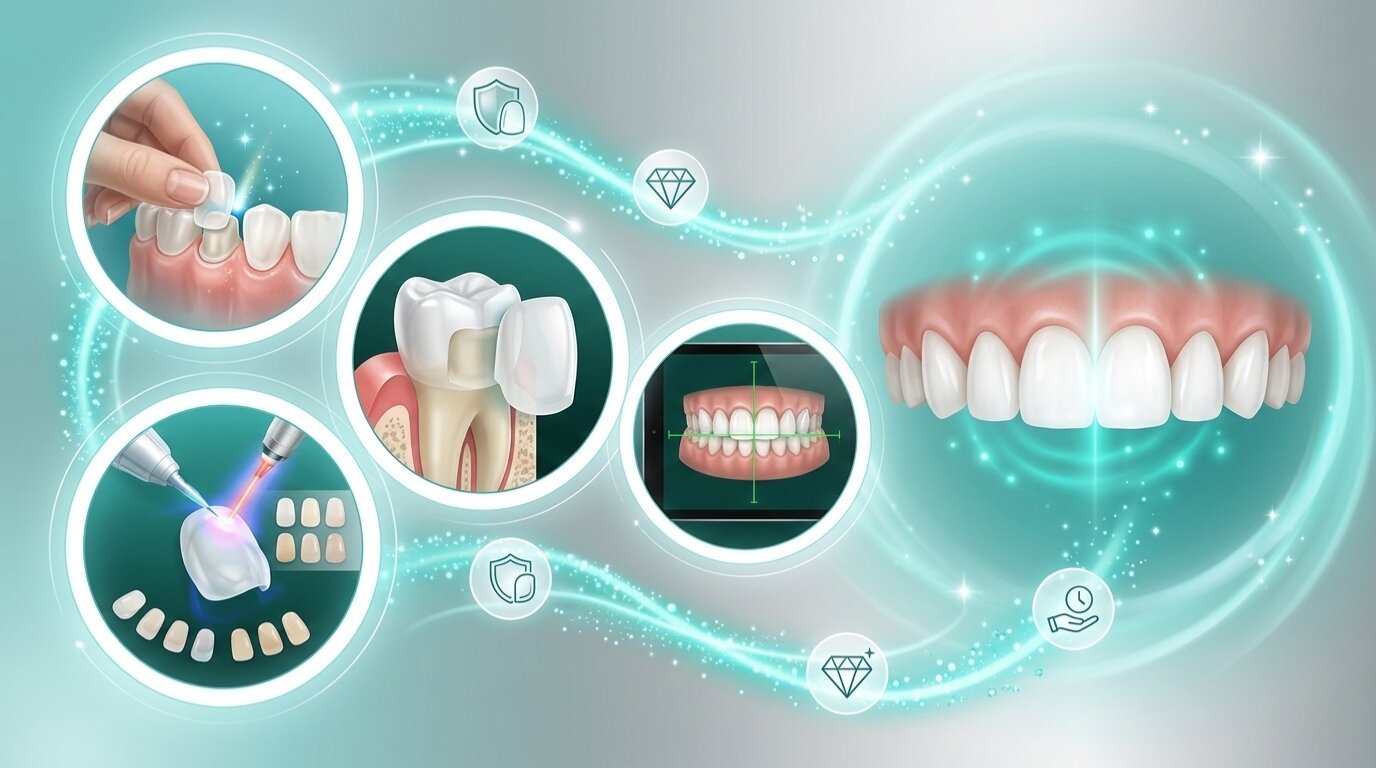
Dental veneers are a popular cosmetic dentistry treatment designed to enhance the appearance of your smile. Veneers are thin, custom-made shells, most commonly crafted from high-quality porcelain, that are carefully bonded to the front surface of the teeth. They are designed to improve the colour, shape, size, and alignment of teeth, creating a brighter and more balanced smile.
Porcelain veneers are widely used in smile makeover treatments because they provide natural-looking, long-lasting cosmetic results while maintaining the strength and function of your teeth.
Dental Veneers Can Help Correct:
Discoloured or deeply stained teeth that do not respond well to teeth whitening
Chipped or cracked teeth
Gaps between teeth
Mild tooth misalignment
Uneven, irregular, or worn teeth
Benefits of Dental Veneers
Dental veneers offer several advantages for patients seeking cosmetic dental improvements:
Highly natural and aesthetic appearance, designed to match the colour and shape of natural teeth
Stain-resistant porcelain surface, helping maintain a bright smile over time
Long-lasting durability, with many veneers lasting 10 to 15 years or more with proper care
Dramatic smile transformation, often used in comprehensive smile makeover treatments
Porcelain veneers are known for their strength, durability, and resistance to staining, making them an excellent option for patients who want a long-term cosmetic dentistry solution that delivers natural-looking and consistent results.
What Is Composite Bonding?
Composite bonding, also known as dental bonding, is a minimally invasive cosmetic dentistry treatment used to improve the appearance of teeth. The procedure involves applying a tooth-coloured composite resin directly to the surface of the tooth. The material is then carefully shaped, hardened, and polished to create a natural-looking result that blends seamlessly with your surrounding teeth.
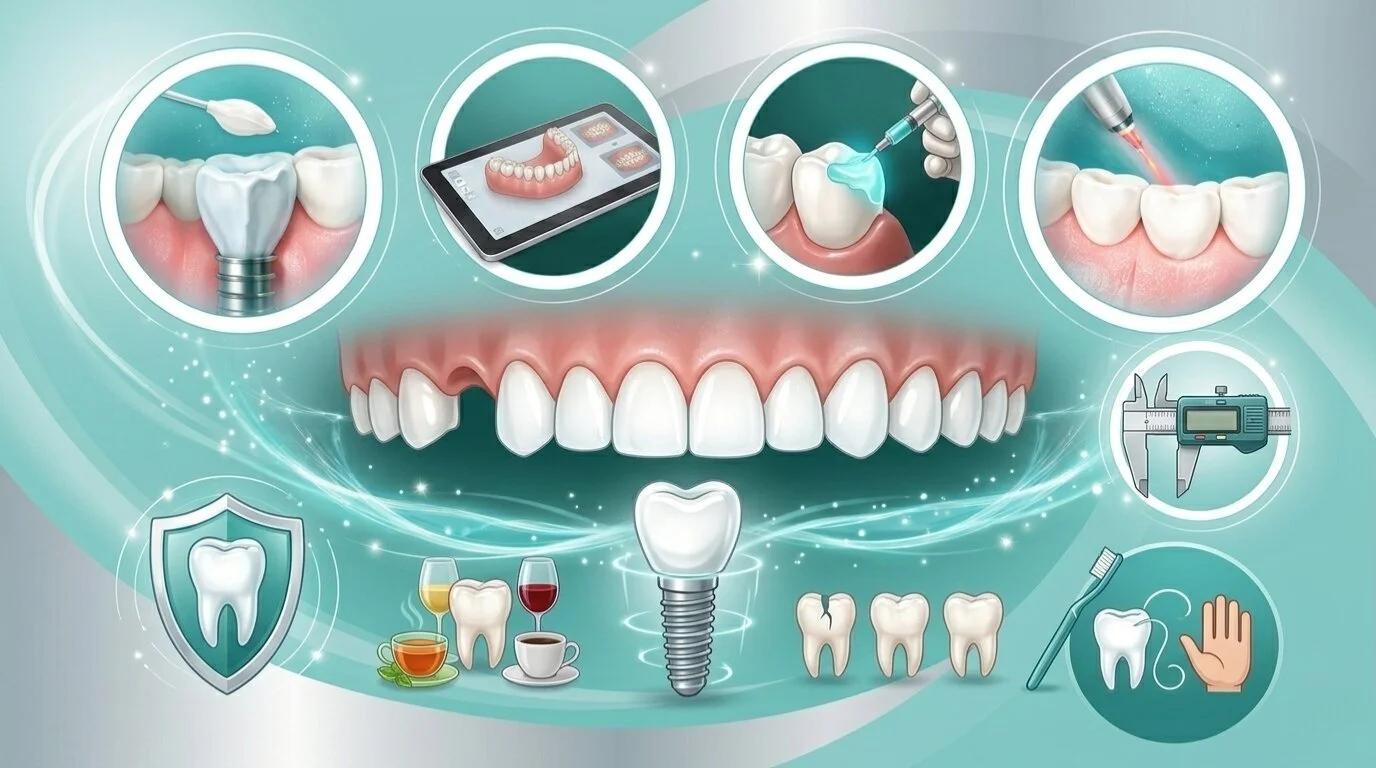
Composite bonding is often recommended for patients who want to correct minor cosmetic imperfections quickly and effectively, without extensive dental preparation.
What Can Composite Bonding Correct?
Composite bonding can help improve several minor dental concerns, including:
Small chips or minor damage to the teeth
Minor cracks in tooth enamel
Small gaps between teeth
Slight tooth discolouration
Minor reshaping to improve tooth symmetry
One of the main advantages of composite bonding is that the treatment is typically completed in a single dental visit. In most cases, it requires little to no removal of natural tooth structure, making it a conservative and convenient cosmetic dentistry option for enhancing your smile.
Key Differences Between Veneers and Composite Bonding
When comparing veneers vs composite bonding, several important factors should be considered. Both cosmetic dentistry treatments can improve the appearance of your smile, but they differ in terms of materials, durability, procedure, and long-term results.
1. Material Used
Dental veneers are typically made from high-quality porcelain, a durable material that closely resembles the natural translucency of tooth enamel. Porcelain veneers are also highly resistant to staining, making them a long-lasting cosmetic solution.
In contrast, composite bonding uses a tooth-coloured resin material that is applied and shaped directly on the tooth. While this material provides excellent cosmetic improvement, it may be more susceptible to staining over time compared to porcelain.
2. Longevity and Durability
Porcelain veneers are known for their long-term durability, often lasting 10 to 15 years or longer with proper care and regular dental check-ups.
Composite bonding generally has a shorter lifespan, typically lasting between three and seven years before requiring maintenance, touch-ups, or replacement.
3. Treatment Procedure
The process for placing dental veneers usually involves two dental appointments. During the first visit, the dentist prepares the teeth by gently reshaping a small amount of enamel and taking impressions for the custom veneers.
Composite bonding, however, is often completed in a single dental visit. The dentist applies the composite resin directly to the tooth, shapes it to the desired form, and hardens it using a special curing light. This treatment usually requires minimal tooth preparation.
4. Aesthetic Results
Porcelain veneers offer a highly polished, natural-looking appearance with a translucent finish that closely mimics natural enamel. This makes veneers a popular choice for patients seeking a dramatic smile transformation.
Composite bonding can also provide significant cosmetic improvement, particularly for minor imperfections. However, the final finish may not maintain the same long-term shine and stain resistance as porcelain veneers.
Summary: Which Option Is Right for You?
Dental veneers are often the preferred choice for patients seeking a long-lasting and comprehensive smile enhancement.
Composite bonding is ideal for quick, minimally invasive, and more budget-friendly cosmetic corrections.
A professional cosmetic dentistry consultation can help determine whether veneers or composite bonding is the most suitable option for achieving your desired smile results.
Cost Comparison: Veneers vs Composite Bonding
For many patients, cost is an important factor when choosing between veneers and composite bonding. While both cosmetic dentistry treatments can enhance the appearance of your smile, they differ in terms of initial cost, durability, and long-term value.
Cost of Dental Veneers
Porcelain veneers are typically more expensive than composite bonding because they are custom-designed and fabricated in a dental laboratory using high-quality materials. The treatment process also involves detailed planning to ensure a precise fit and natural appearance.
However, veneers are widely considered a long-term investment in your smile, as they are highly durable and can often last 10 to 15 years or longer with proper care.
Cost of Composite Bonding
Composite bonding is generally a more affordable cosmetic dentistry option in the short term. The procedure is completed directly in the dental clinic and does not require laboratory fabrication, which helps reduce the overall treatment cost.
However, composite bonding may require periodic maintenance, repairs, or replacement over time, as the resin material is more susceptible to staining and wear compared to porcelain veneers.
Choosing the Best Option for Your Budget
The most suitable option depends on your cosmetic goals, dental condition, and budget. A professional cosmetic dentistry consultation allows your dentist to assess your smile and provide a personalised treatment plan with an accurate cost estimate tailored to your needs.
Ready for a Smile Transformation?
Enhancing your smile with cosmetic dentistry can significantly improve both your appearance and confidence. Choosing between veneers and composite bonding is an important decision, as each treatment offers unique benefits depending on your dental needs and aesthetic goals.
A professional cosmetic dentistry consultation allows your dentist to carefully evaluate your teeth, discuss your smile expectations, and recommend the most suitable treatment option. With a personalised treatment plan, you can achieve natural-looking, long-lasting results that enhance the overall appearance of your smile.
Frequently Asked Questions (FAQs)
-
The best option depends on your cosmetic goals and dental needs. Porcelain veneers are more durable and highly stain-resistant, making them a popular choice for comprehensive smile makeovers. Composite bonding, on the other hand, is often recommended for minor cosmetic corrections and is typically a more affordable treatment option.
-
Most patients experience minimal discomfort during the veneer procedure. Your dentist may use local anaesthesia when preparing the teeth to ensure the treatment remains comfortable.
-
3. Does composite bonding damage natural teeth?
-
Composite bonding typically lasts between three and seven years, depending on factors such as oral hygiene habits, diet, and lifestyle. Regular dental check-ups and proper care can help maintain the results for longer.
-
Dental veneers are considered a long-term cosmetic dental solution. Because a small amount of enamel is usually removed during the preparation process, veneers are generally not reversible. With proper care, porcelain veneers can last 10 to 15 years or longer before replacement may be required.
-
Composite bonding generally has a lower initial cost per tooth, making it a more accessible option for many patients. However, porcelain veneers may provide better long-term value due to their durability, stain resistance, and longer lifespan. A professional dental consultation can help determine the most suitable treatment based on your smile goals and budget.
Schedule Your Smile Makeover Consultation
Take the first step towards achieving the confident, beautiful smile you deserve.
If you are considering cosmetic dentistry treatments such as dental veneers or composite bonding, scheduling a professional smile makeover consultation is the best way to explore your options.
Book your smile makeover consultation today and take the next step towards a healthier, brighter, and more confident smile.