
What Are Oral Health Products & Which Ones Do You Really Need?
Maintaining good oral hygiene is not just about brushing your teeth twice a day. It also involves using the right oral health products to protect your teeth, gums, and overall mouth health.
With so many products available on the market, patients often ask: Which oral care products are actually necessary, and which ones are optional?
In this guide, we’ll break down the essential oral health products recommended by dental professionals and explain how each one contributes to a healthier smile.
What Are Oral Health Products?
Oral health products are tools and hygiene items designed to help clean your teeth and gums, prevent dental disease, and maintain fresh breath.
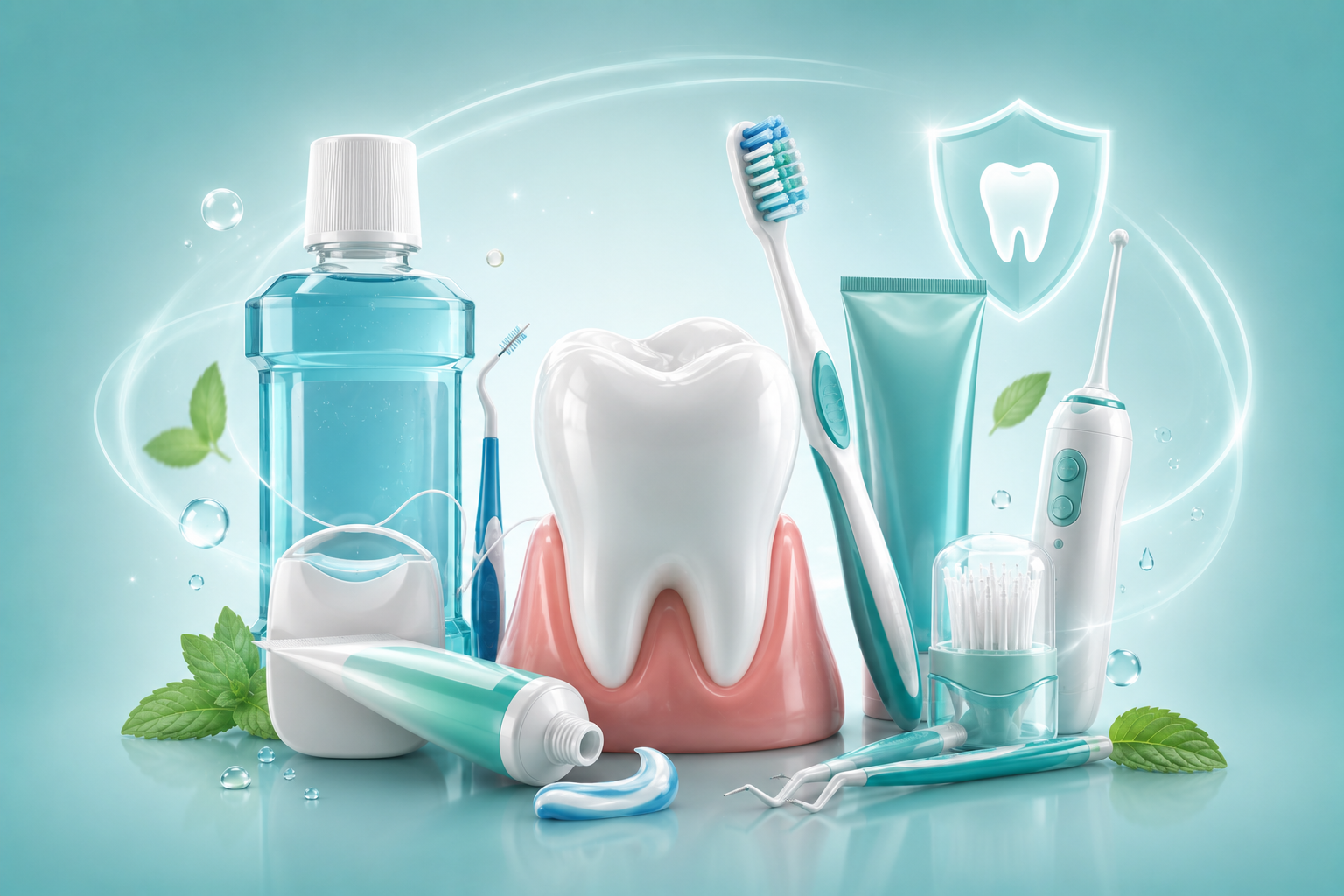
These products support daily oral care routines and help reduce the risk of common conditions such as tooth decay, gum disease, and bad breath. According to dental health organisations, using the correct combination of oral hygiene tools significantly improves long-term oral health outcomes.
Essential Oral Health Products You Really Need
1. Fluoride Toothpaste
Fluoride toothpaste is the foundation of any effective oral hygiene routine. Fluoride helps strengthen tooth enamel and protect against cavities by making teeth more resistant to acid attacks from plaque bacteria.
Why it’s essential:
Prevents tooth decay
Strengthens enamel
Helps reverse early signs of decay
Dentists widely recommend brushing twice daily using a fluoride toothpaste as a non-negotiable step in oral care.
2. Toothbrush (Manual or Electric)
A good toothbrush is one of the most important oral health tools.
Manual toothbrush:
Affordable and effective when used correctly with proper technique.
Electric toothbrush:
Often recommended by dental professionals because it provides more consistent cleaning and can reduce plaque more effectively in some patients.
Key tip:
Replace your toothbrush or brush head every 3 months, or sooner if bristles are worn.
3. Dental Floss
Flossing is essential for cleaning between teeth where a toothbrush cannot reach.
Plaque and food particles trapped between teeth can lead to gum disease and cavities if not removed regularly.
Benefits of flossing:
Reduces gum inflammation
Prevents inter-dental decay
Improves overall gum health
Daily flossing is strongly recommended by dentists as part of a complete oral care routine.
4. Mouthwash
Mouthwash is a useful additional product that helps reduce bacteria, freshen breath, and support gum health.
There are different types of mouthwash, including:
Fluoride mouthwash (for strengthening teeth)
Antibacterial mouthwash (for reducing plaque and gingivitis)
Important note:
Mouthwash should complement brushing and flossing, not replace them.
5. Interdental Brushes
Interdental brushes are small, specialised brushes designed to clean between teeth, particularly useful for people with larger gaps, braces, or gum recession.
Benefits:
More effective than floss for some patients
Helps reduce gum disease risk
Ideal for orthodontic patients
Many dental professionals recommend interdental brushes as part of advanced oral hygiene care.
6. Tongue Cleaner
A tongue scraper or tongue cleaner helps remove bacteria from the surface of the tongue, which is a common source of bad breath.
Benefits:
Reduces halitosis (bad breath)
Improves oral freshness
Helps lower bacterial load in the mouth
Although often overlooked, tongue cleaning is an important part of full-mouth hygiene.
7. Sugar-Free Chewing Gum (Optional)
Sugar-free chewing gum is not a replacement for brushing but can help stimulate saliva production after meals.
Saliva plays an important role in:
Neutralising acids
Washing away food particles
Supporting enamel health
Look for gum containing xylitol, which may help reduce cavity-causing bacteria.
Which Oral Health Products Do You Really Need?
If you want a simple, effective routine, the non-negotiable essentials are:
Fluoride toothpaste
Toothbrush (manual or electric)
Dental floss or interdental brushes
These three form the core of daily oral hygiene and are sufficient for most patients.
Recommended additions:
Mouthwash (for extra protection)
Tongue cleaner (for fresh breath and hygiene)
Optional support:
Sugar-free chewing gum
Common Mistakes Patients Make
Many patients believe that using more products automatically means better oral health. However, technique and consistency are far more important than quantity.
Common mistakes include:
Over-reliance on mouthwash
Not flossing regularly
Using incorrect brushing technique
Skipping interdental cleaning
How to Choose the Right Oral Care Products
When selecting oral health products, consider:
Your gum health condition
Sensitivity levels
Presence of braces or dental work
Dentist recommendations
Fluoride content in toothpaste
A personalised approach is always best, especially if you have ongoing dental concerns.
Final Thoughts
Oral health products play a vital role in preventing dental disease and maintaining a healthy smile. While there are many options available, only a few are truly essential for daily use.
A consistent routine that includes brushing with fluoride toothpaste, flossing, and regular dental check-ups is the foundation of excellent oral health. Additional products such as mouthwash or interdental brushes can further enhance your routine depending on your individual needs.
Book Your Consultation
At Euro Dental Care, we believe that prevention is the key to long-term oral health. Our experienced dental team provides personalised advice on the most effective oral hygiene products tailored to your needs.
Whether you are looking to improve your daily routine, manage gum disease, or simply maintain a healthy smile, we are here to guide you every step of the way.
Book your appointment with Euro Dental Care today and take control of your oral health with professional support and expert care.