
Why Mental Health and Oral Health Are More Connected Than You Think
Mental health and oral health may seem like two completely separate areas of healthcare, but in reality, they are closely linked. Increasing research shows that conditions such as stress, anxiety, and depression can significantly affect how people care for their teeth and gums, and how their oral health responds over time.
This connection often creates a cycle: poor mental health can lead to poorer oral health habits, and untreated dental problems can, in turn, affect confidence, wellbeing, and emotional health.
In this article, we explore how mental health and oral health influence each other and why taking care of one often means taking care of the other.
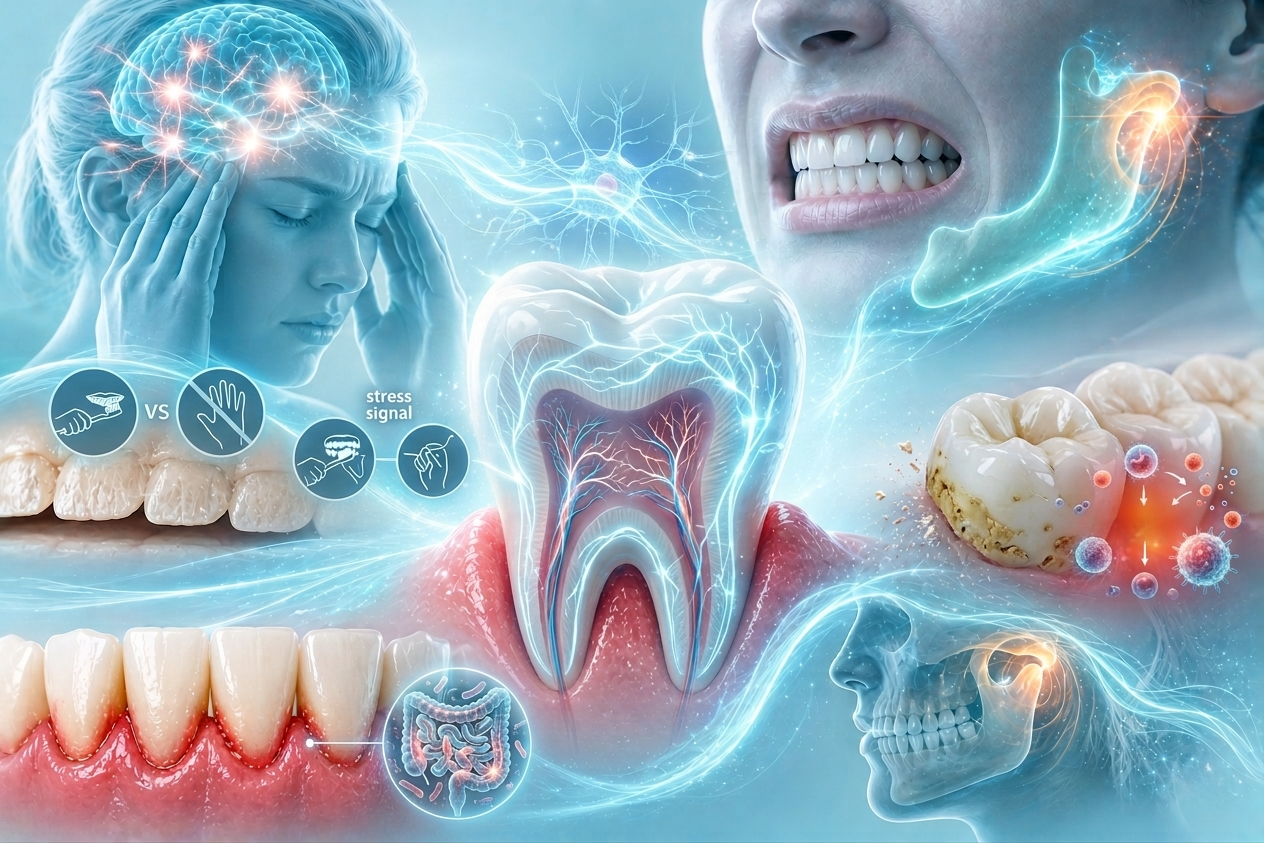
How Mental Health Affects Oral Health
When someone is struggling with mental health challenges, daily routines can become difficult to maintain. This includes essential habits like brushing and flossing.
Common ways mental health can impact oral health:
Reduced motivation for oral hygiene
Increased consumption of sugary comfort foods
Irregular sleep patterns affecting health routines
Avoiding dental appointments due to anxiety or fear
Over time, these changes can increase the risk of tooth decay, gum disease, and bad breath.
Stress and Its Impact on Teeth and Gums
Stress is one of the most common mental health factors affecting oral health.
It can lead to:
1. Teeth grinding (bruxism)
Many people grind or clench their teeth during sleep or periods of stress, which can cause:
Tooth wear
Jaw pain
Headaches
Cracked teeth
2. Gum inflammation
Stress may weaken the immune system, making gums more vulnerable to inflammation and infection.
3. Dry mouth
Anxiety and stress can reduce saliva production, increasing the risk of:
Cavities
Bad breath
Gum irritation
Depression and Oral Health Neglect
Depression can make even basic daily tasks feel overwhelming. This may lead to:
Skipping brushing or flossing
Irregular dental visits
Increased sugar intake
Reduced self-care routines
These habits can quickly contribute to worsening oral health if not addressed early.
Oral Health’s Impact on Mental Wellbeing
The relationship works both ways. Oral health problems can also affect mental health.
1. Self-confidence and appearance
Dental issues such as:
Missing teeth
Discolouration
Bad breath
can affect confidence and willingness to smile or speak in social situations.
2. Social anxiety
Some people may avoid social interactions due to embarrassment about their teeth or oral health.
3. Chronic pain and stress
Ongoing tooth or gum pain can affect sleep, mood, and concentration, contributing to emotional strain.
Dental Anxiety: A Common Barrier to Care
Dental anxiety is a significant issue that can prevent people from seeking treatment.
It may be caused by:
Previous negative experiences
Fear of pain
Embarrassment about oral health
General anxiety disorders
Avoiding the dentist often leads to worsening dental problems, which can increase stress and anxiety further.
The Role of Routine in Breaking the Cycle
One of the most effective ways to improve both mental and oral health is by maintaining simple, consistent routines.
Helpful habits include:
✔ Brushing twice daily with fluoride toothpaste
✔ Cleaning between teeth daily
✔ Drinking enough water
✔ Limiting sugar intake
✔ Attending regular dental check-ups
Even small, consistent actions can make a big difference over time.
When Mental Health Affects Oral Health: Warning Signs
You should be aware of signs such as:
Rapid decline in oral hygiene
Frequent tooth decay or gum problems
Persistent dry mouth
Jaw pain or grinding
Avoidance of dental care
Noticeable changes in diet (increased sugar intake)
These may indicate that mental health is impacting oral health habits.
How Dentists Can Help
Modern dentistry is not just about treating teeth. It is also about supporting patient wellbeing.
A dentist may help by:
Providing gentle, non-judgemental care
Offering solutions for tooth grinding (night guards)
Treating gum disease early
Helping manage dental anxiety
Providing clear, simple treatment plans
Open communication with your dentist can make care more comfortable and effective.
When Should You Seek Help?
You should consider seeing a dentist if you experience:
Tooth pain or sensitivity
Bleeding gums
Difficulty maintaining oral hygiene
Jaw pain or headaches
Embarrassment affecting your confidence
Early support can prevent both oral and emotional health from worsening.
Final Thoughts
Mental health and oral health are deeply connected, influencing each other in ways many people do not realise. Stress, anxiety, and depression can affect daily oral care habits, while dental problems can also impact confidence and emotional wellbeing.
Taking care of your mental health supports your oral health and looking after your oral health can also support your overall quality of life.
Book Your Consultation
At Euro Dental Care, we understand that visiting the dentist can feel challenging for some patients. Our team provides gentle, supportive, and judgement-free care to help you feel comfortable at every stage of treatment.
Whether you are dealing with dental anxiety, gum problems, or tooth pain, we are here to help you restore both your oral health and confidence.
Book your appointment with Euro Dental Care today and take a positive step toward better health and wellbeing.