
The Lifestyle Habits That Accelerate Tooth Decay
Tooth decay is one of the most common oral health problems in the UK, yet it is also largely preventable. While bacteria and plaque play a direct role in causing cavities, everyday lifestyle habits often determine how quickly decay develops.
Many patients are surprised to learn that it is not just sugar alone that damages teeth, but also how frequently we eat, drink, and care for our mouths throughout the day.
In this article, we explore the key lifestyle habits that accelerate tooth decay and how you can protect your teeth more effectively.
What Is Tooth Decay?
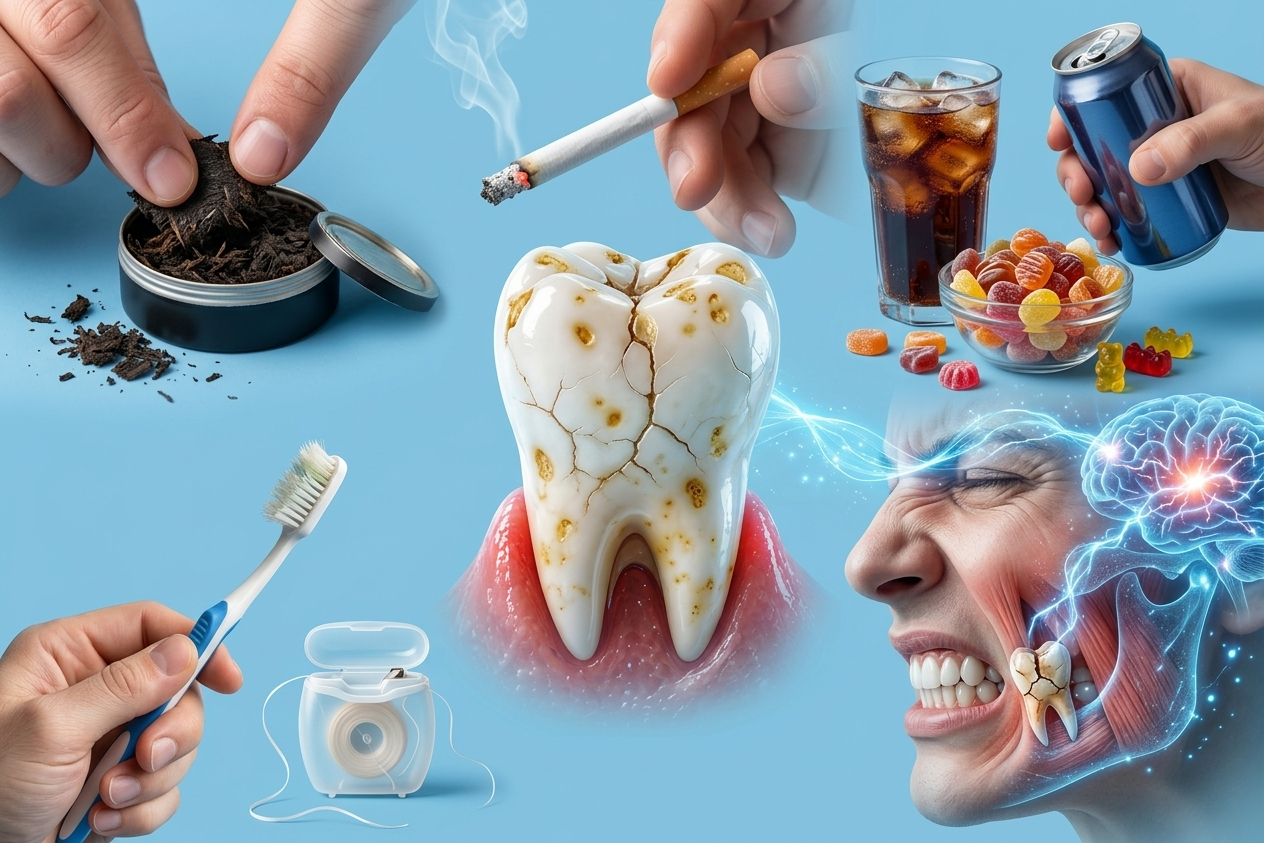
Tooth decay (dental caries) occurs when bacteria in the mouth produce acids that gradually break down tooth enamel. Over time, this can lead to:
Cavities (holes in teeth)
Tooth sensitivity
Pain or infection
In severe cases, tooth loss
The process is often slow and silent, meaning damage can occur before symptoms are noticed.
1. Frequent Snacking Throughout the Day
One of the biggest contributors to tooth decay is constant snacking, especially on sugary or starchy foods.
Every time you eat, bacteria produce acid that attacks enamel for around 20–30 minutes. If you snack frequently, your teeth are exposed to acid repeatedly without enough recovery time.
High-risk snacks include:
Biscuits
Crisps
Sweets
Cakes
Sugary cereal bars
2. Sugary Drinks and Sipping All Day
Sugary drinks such as fizzy drinks, energy drinks, and sweetened juices are particularly harmful when consumed slowly over time.
Sipping throughout the day means your teeth are constantly exposed to sugar and acid.
Common examples:
Soft drinks
Flavoured coffees
Energy drinks
Fruit juices
Even “sugar-free” acidic drinks can still weaken enamel over time.
3. Poor Brushing Technique
Brushing is essential, but incorrect brushing habits can reduce its effectiveness.
Common mistakes include:
Not brushing twice daily
Brushing too quickly (less than 2 minutes)
Missing the gumline and back teeth
Using a worn toothbrush
Brushing irregularly during busy routines
Without proper cleaning, plaque builds up and increases decay risk.
4. Not Cleaning Between Teeth
Toothbrushes cannot reach all surfaces, especially between teeth where decay often begins.
Failing to clean between teeth allows plaque to accumulate, increasing the risk of hidden cavities and gum disease.
Recommended methods include:
Dental floss
Interdental brushes
5. Frequent Consumption of Acidic Foods
Acidic foods and drinks weaken enamel, making teeth more vulnerable to decay.
Common acidic items include:
Citrus fruits
Vinegar-based foods
Fizzy drinks
Wine (if applicable)
When enamel is weakened, bacteria can cause damage more easily.
6. Dry Mouth (Low Saliva Flow)
Saliva plays a protective role by:
Washing away food particles
Neutralising acids
Supporting enamel repair
A dry mouth increases the risk of decay because bacteria can thrive more easily.
Causes of dry mouth may include:
Dehydration
Certain medications
Smoking
Stress
7. Frequent Grazing at Night
Late-night snacking is particularly harmful because saliva production decreases during sleep.
This means:
Food particles remain longer on teeth
Acid attacks last longer
Teeth have less natural protection
Sugary snacks before bed significantly increase decay risk.
8. Avoiding Dental Check-Ups
Skipping regular dental visits allows small problems to develop unnoticed.
Routine check-ups help:
Detect early cavities
Remove hardened tartar
Prevent further decay
Protect long-term oral health
9. Smoking and Oral Hygiene Neglect
Smoking does not directly cause cavities but contributes to:
Reduced saliva flow
Gum disease
Poor oral environment for healing
Combined with poor hygiene, it significantly increases decay risk.
Early Signs of Tooth Decay
You should watch for:
Tooth sensitivity (especially to sweets or cold drinks)
White or dark spots on teeth
Mild toothache
Visible holes or pits
Bad breath
Early detection can prevent more serious damage.
How to Prevent Tooth Decay
Daily habits:
✔ Brush twice a day with fluoride toothpaste
✔ Clean between teeth daily
✔ Drink water regularly
✔ Limit sugary snacks and drinks
Lifestyle changes:
✔ Avoid frequent snacking
✔ Reduce acidic drinks
✔ Maintain regular dental check-ups
✔ Use sugar-free alternatives when possible
When Should You See a Dentist?
You should book an appointment if you experience:
Persistent tooth pain
Sensitivity that worsens
Visible cavities
Discomfort when eating
Signs of infection
Early treatment is key to preventing complications.
Final Thoughts
Tooth decay is strongly influenced by everyday lifestyle habits. While bacteria are the direct cause, frequent snacking, sugary drinks, poor hygiene, and missed dental visits all accelerate the process.
The good news is that most cases of tooth decay are preventable with consistent oral care and healthier daily habits.
Book Your Consultation
At Euro Dental Care, we provide preventive and restorative dental care to help patients stop tooth decay early and maintain long-term oral health. Our team focuses on early detection, hygiene education, and personalised treatment plans.
If you are experiencing sensitivity or suspect early decay, we are here to help.
Book your appointment with Euro Dental Care today and take control of your oral health before problems progress.