
Smoking and Oral Health: How It Damages Your Teeth, Gums and Smile Over Time
Smoking is widely known for its harmful effects on the lungs and heart, but its impact on oral health is often underestimated. In reality, tobacco use can cause significant and long-term damage to your teeth, gums, and overall smile.
From persistent bad breath and stained teeth to gum disease and even tooth loss, smoking affects nearly every aspect of oral health. What makes it more concerning is that many of these problems develop gradually. Often without obvious pain in the early stages.
In this guide, we explain how smoking damages your oral health over time and why early prevention and regular dental care are essential.
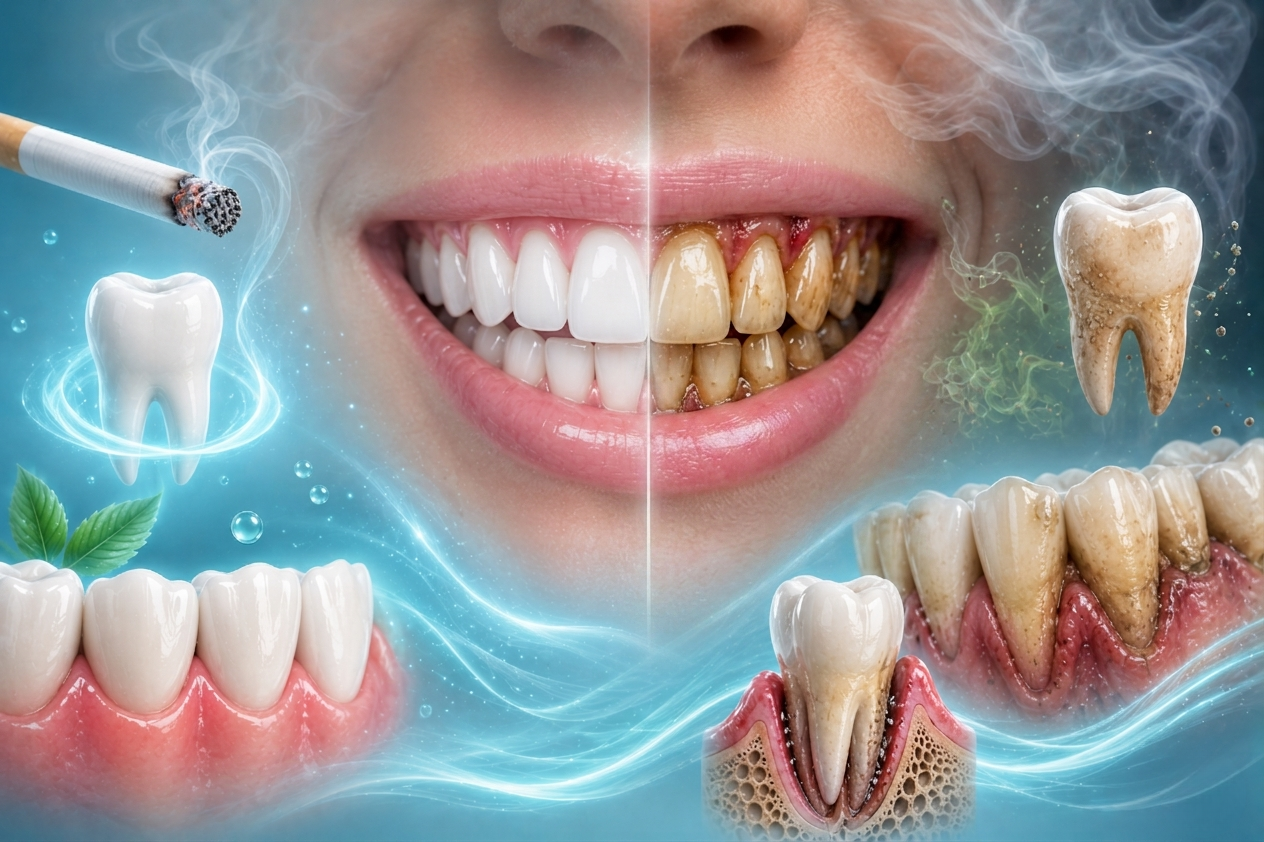
How Smoking Affects Your Mouth
When you smoke, harmful chemicals such as nicotine, tar, and carbon monoxide enter your mouth and bloodstream. These substances can:
Reduce blood flow to the gums
Weaken the immune system
Increase harmful bacteria in the mouth
Slow down healing after dental treatment
Stain teeth and soft tissues
Over time, these effects create an environment where oral diseases can develop more easily and progress faster.
1. Stained Teeth and Discoloured Smile
One of the earliest and most visible effects of smoking is tooth staining.
Nicotine and tar can quickly build up on the surface of teeth, leading to:
Yellow or brown discoloration
Dull-looking enamel
Stains that are difficult to remove with regular brushing
Even professional cleaning may be needed more frequently for smokers to maintain a brighter smile.
2. Bad Breath (Smoker’s Breath)
Smoking significantly increases the risk of persistent bad breath, also known as halitosis.
This happens because:
Tobacco particles remain in the mouth and lungs
Smoking reduces saliva flow
Bacteria multiply more easily in a dry environment
Even with good oral hygiene, smoker’s breath can be difficult to eliminate without stopping tobacco use.
3. Gum Disease and Inflammation
Smoking is one of the major risk factors for gum disease (periodontal disease).
It affects gum health by:
Restricting blood flow to gum tissues
Weakening the body’s ability to fight infection
Masking early signs like bleeding gums
Early warning signs include:
Red or swollen gums
Gum recession
Persistent bad breath
Loose teeth in advanced stages
Because smoking can reduce bleeding, gum disease may progress unnoticed until it becomes severe.
4. Tooth Loss
As gum disease progresses, it damages the structures that support your teeth. Over time, this can lead to:
Loose teeth
Bone loss around teeth
Eventually, tooth loss
Smokers are significantly more likely to experience tooth loss compared to non-smokers, especially if gum disease is left untreated.
5. Delayed Healing After Dental Treatment
Smoking can slow down the body’s natural healing process.
This may affect recovery after:
Tooth extractions
Dental implants
Gum treatments
Oral surgery
Reduced blood flow means less oxygen reaches healing tissues, increasing the risk of complications such as infection or dry socket after extractions.
6. Increased Risk of Oral Infections and Cancer
Long-term smoking increases the risk of serious oral health conditions, including:
Oral infections
Slow-healing ulcers
Precancerous changes in the mouth
Oral cancer
Regular dental check-ups are essential for early detection of any abnormal changes.
7. Dry Mouth and Reduced Saliva Flow
Smoking reduces saliva production, leading to dry mouth.
Saliva is essential because it:
Washes away bacteria
Protects tooth enamel
Helps prevent decay
Without enough saliva, the risk of tooth decay and gum disease increases significantly.
Can the Damage Be Reversed?
The good news is that many smoking-related oral health problems can improve after quitting.
After stopping smoking, patients may notice:
Healthier gum tissue over time
Reduced risk of gum disease progression
Improved breath
Better healing after dental treatment
Enhanced overall oral health
However, some damage (such as advanced gum disease or tooth loss) may require professional dental treatment.
How to Protect Your Oral Health If You Smoke
If you are not ready to quit, there are still steps you can take to reduce risk:
✔ Brush twice daily with fluoride toothpaste
✔ Floss or use interdental brushes daily
✔ Attend regular dental check-ups
✔ Book professional hygiene cleanings
✔ Stay hydrated to support saliva flow
✔ Avoid excessive sugary snacks and drinks
These habits help minimise damage and support gum health.
When Should You See a Dentist?
You should book a dental appointment if you notice:
Bleeding or swollen gums
Persistent bad breath
Loose teeth
Gum recession
Tooth sensitivity or pain
Changes in mouth tissue colour or texture
Early intervention can prevent more serious complications.
Final Thoughts
Smoking has a gradual but powerful impact on oral health. From staining and bad breath to gum disease and tooth loss, the effects build up over time and often go unnoticed until significant damage has occurred.
Understanding these risks is the first step toward prevention and better long-term oral health.
Book Your Consultation
At Euro Dental Care, we provide comprehensive dental care to help patients maintain healthy teeth and gums, including professional hygiene treatments, gum disease management, and preventive check-ups.
If you are experiencing smoking-related oral health concerns or want to improve your dental health, our team is here to support you.
Book your appointment with Euro Dental Care today and take the first step toward a healthier, brighter smile.