
Gingivitis vs Periodontitis: What’s the Difference?
Gum disease is one of the most common oral health problems in the UK, yet many people do not realise there are different stages of the condition. The two main forms are gingivitis and periodontitis, and while they are related, they are not the same.
Understanding the difference is important because early gum disease can often be reversed, while advanced stages may cause permanent damage to your teeth and supporting bone.
In this guide, we break down gingivitis vs periodontitis in a clear, simple way so you know what to look out for and when to seek dental treatment.
What Is Gingivitis?
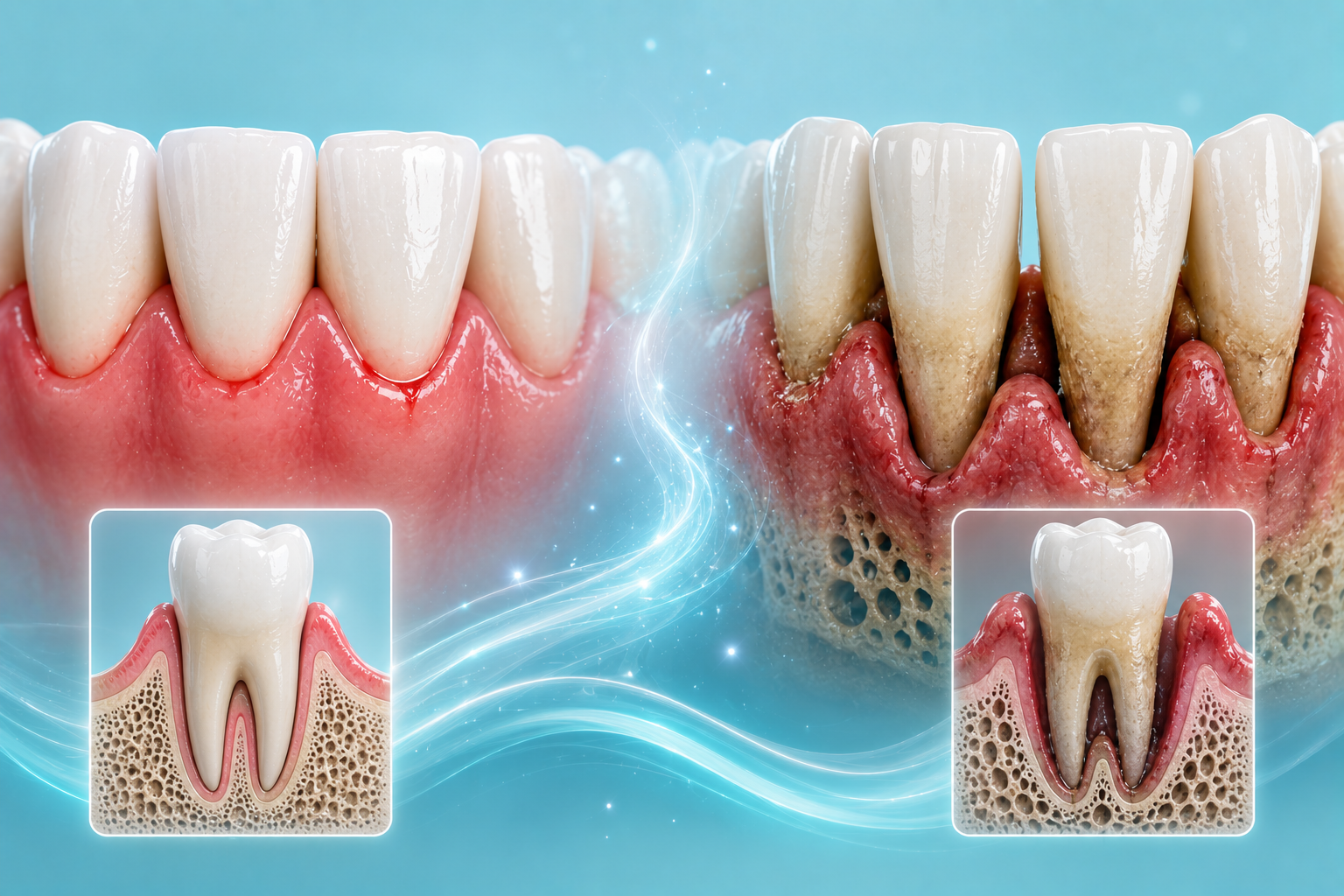
Gingivitis is the early stage of gum disease. It happens when plaque (a sticky film of bacteria) builds up along the gumline and causes inflammation.
At this stage, the infection is usually mild and has not yet affected the bone that supports the teeth.
Common signs of gingivitis include:
Red or swollen gums
Bleeding when brushing or flossing
Mild gum tenderness
Persistent bad breath
The good news is that gingivitis is often reversible with proper oral hygiene and professional cleaning.
What Is Periodontitis?
Periodontitis is the advanced stage of gum disease. It develops when gingivitis is left untreated, allowing the infection to spread deeper below the gumline.
At this stage, the body’s immune response begins to break down the bone and tissues that support the teeth.
Common signs of periodontitis include:
Receding gums (teeth appearing longer)
Loose or shifting teeth
Pockets forming between teeth and gums
Pain when chewing
Persistent bad breath
In severe cases, tooth loss
Unlike gingivitis, periodontitis can cause permanent damage to the supporting bone structure.
Key Differences Between Gingivitis and Periodontitis
1. Severity
Gingivitis: Mild inflammation of the gums
Periodontitis: Advanced infection affecting bone and tissue
2. Reversibility
Gingivitis: Reversible with good oral hygiene and professional care
Periodontitis: Not fully reversible, but can be managed and stabilised
3. Damage to Bone
Gingivitis: No bone loss
Periodontitis: Bone loss around teeth is common
4. Tooth Stability
Gingivitis: Teeth remain stable
Periodontitis: Teeth may become loose or fall out
How Does Gingivitis Develop Into Periodontitis?
Gingivitis progresses when plaque is not removed effectively. Over time, bacteria spread deeper under the gums, causing chronic inflammation.
Factors that increase risk include:
Poor oral hygiene
Smoking
Diabetes
Stress
Genetic predisposition
Poor diet high in sugar
Without treatment, gingivitis can gradually progress into periodontitis.
Why Early Detection Is So Important
The biggest difference between gingivitis and periodontitis is timing.
If caught early, gum disease can often be reversed before permanent damage occurs. However, once bone loss begins, treatment becomes more complex.
Early treatment can help:
Prevent tooth loss
Stop disease progression
Reduce inflammation
Improve long-term oral health
How Dentists Treat Gingivitis
Treatment for gingivitis usually includes:
Professional dental cleaning (scale and polish)
Improved brushing and flossing techniques
Antibacterial mouth rinses (if needed)
Regular dental check-ups
With consistent care, gums can return to a healthy state.
How Dentists Treat Periodontitis
Treatment for periodontitis may involve:
Deep cleaning below the gumline (deep scaling)
Root surface cleaning
Ongoing periodontal maintenance
In some cases, surgical treatment
Monitoring bone levels with X-rays
The goal is to stop further damage and preserve remaining teeth.
Can Gum Disease Be Prevented?
Yes, gum disease is largely preventable with good daily habits.
To reduce your risk:
✔ Brush twice daily with fluoride toothpaste
✔ Clean between teeth daily (floss or interdental brushes)
✔ Attend regular dental check-ups
✔ Avoid smoking
✔ Reduce sugary snacks and drinks
Prevention is always more effective than treatment.
When Should You See a Dentist?
You should book a dental appointment if you notice:
Bleeding gums
Swollen or red gums
Persistent bad breath
Gum recession
Loose teeth
Pain when chewing
Early assessment can prevent gingivitis from progressing into more serious periodontitis.
Final Thoughts
Gingivitis and periodontitis are two stages of gum disease, but they differ greatly in severity and long-term impact. Gingivitis is an early, reversible condition, while periodontitis can cause permanent damage if left untreated.
Recognising the symptoms early and maintaining good oral hygiene are key to protecting your gums and teeth.
Book Your Consultation
At Euro Dental Care, we provide comprehensive gum disease assessment and treatment, from early gingivitis management to advanced periodontal care. Our dental team focuses on early detection and personalised treatment to help protect your long-term oral health.
If you are experiencing bleeding gums, bad breath, or gum discomfort, we are here to help.
Book your appointment with Euro Dental Care today and take the first step toward healthier gums and a stronger smile.