
Can Hot Weather Make Tooth Sensitivity Feel Worse?
During warm summer days and UK heat waves, many people naturally reach for cold drinks, ice cubes, ice cream, or frozen treats to cool down. While these can feel refreshing, some people notice an uncomfortable sharp sensation in their teeth after taking a sip of icy water or biting into something cold.
If your teeth suddenly feel more sensitive during hot weather, you are not imagining it. Although heat itself does not directly cause tooth sensitivity, seasonal habits and rapid temperature changes can make existing sensitivity feel more noticeable.
In this guide, we explain why hot weather may make tooth sensitivity seem worse, how enamel and exposed dentine contribute to the problem, and what you can do to protect your teeth.
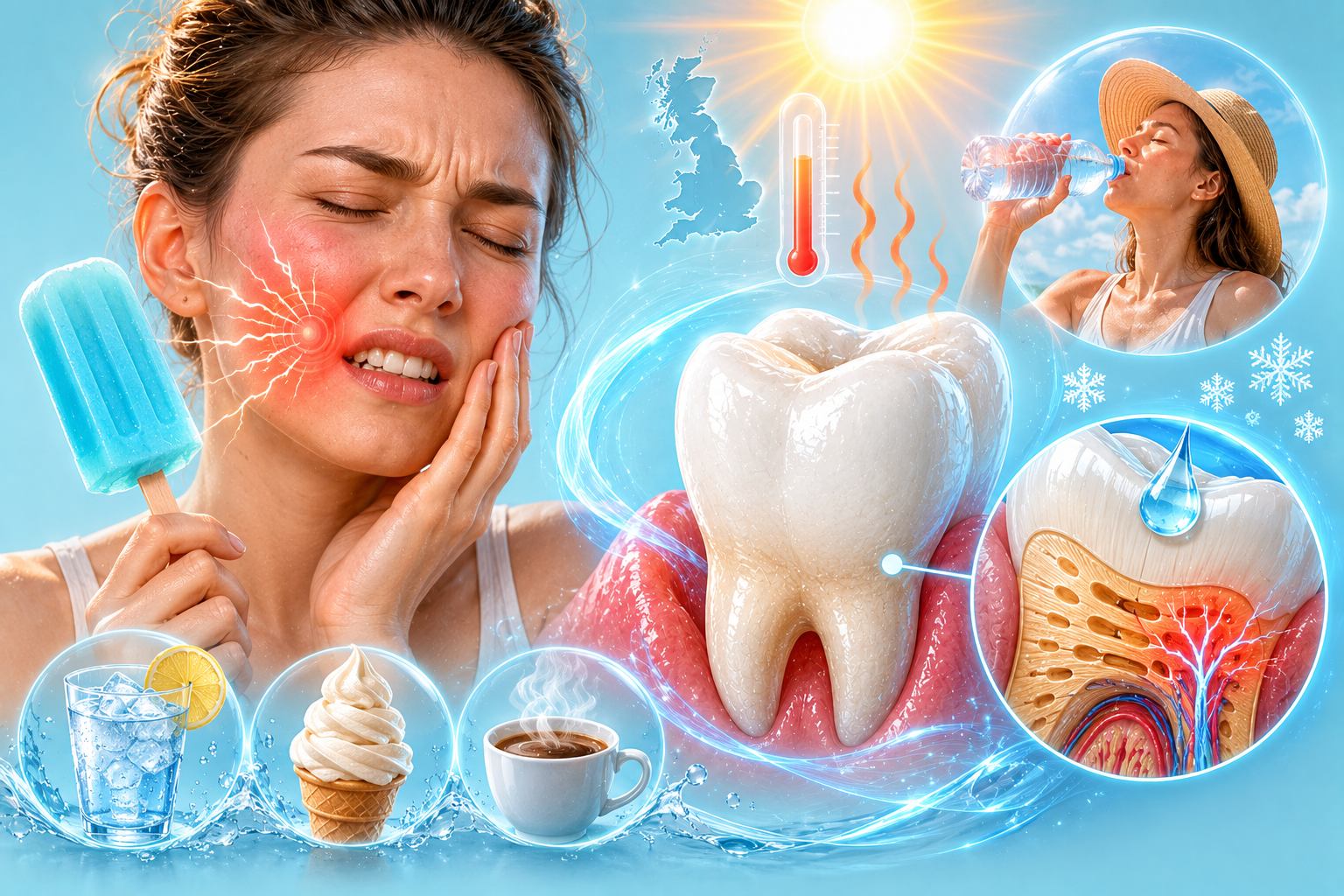
What Is Tooth Sensitivity?
Tooth sensitivity, also known as dentine hypersensitivity, occurs when the protective layers of the tooth become compromised, exposing the inner part of the tooth.
People with sensitive teeth commonly experience:
Sudden sharp pain
Brief discomfort
Tingling sensations
Sensitivity when eating or drinking
Triggers often include:
Hot foods and drinks
Cold temperatures
Sweet foods
Acidic drinks
Brushing teeth
The discomfort may affect one tooth or several teeth at the same time.
Can Hot Weather Make Tooth Sensitivity Feel Worse?
Hot weather itself does not directly damage teeth, but it can contribute to situations that make sensitivity more noticeable.
During summer months, people often consume:
Ice-cold water
Soft drinks
Iced coffee
Ice cream
Frozen desserts
The rapid change between a warm mouth environment and very cold foods or drinks can trigger discomfort in sensitive teeth.
Teeth naturally expand and contract slightly with temperature changes. While these changes are minimal, exposed sensitive areas can react more noticeably.
Why Cold Drinks and Ice Can Trigger Sensitivity
Healthy teeth are protected by a hard outer layer called enamel.
Beneath enamel lies dentine, which contains tiny microscopic channels called tubules.
These tubules connect to the tooth's nerve centre.
When enamel becomes thinner or dentine becomes exposed, cold temperatures can travel through these channels and stimulate the nerve inside the tooth.
This often creates the familiar sharp, sudden discomfort associated with sensitive teeth.
What Causes Enamel Wear?
Enamel is the strongest substance in the body, but it can gradually wear down over time.
Common causes include:
Acidic foods and drinks
Frequent consumption of:
Fizzy drinks
Citrus fruits
Sports drinks
Fruit juices
may slowly soften and weaken enamel.
Teeth grinding (bruxism)
Grinding or clenching teeth can place excessive pressure on enamel surfaces.
Brushing too aggressively
Using excessive force or hard-bristled toothbrushes can contribute to enamel wear and gum recession.
Natural ageing
As we age, some enamel wear occurs naturally.
Acid reflux
Stomach acid repeatedly entering the mouth can gradually erode tooth surfaces.
Exposed Dentine Can Increase Sensitivity
Sensitivity does not only occur because of enamel wear.
Exposed dentine may also develop when gums recede.
Gum recession can expose root surfaces that lack the protective enamel covering found on the visible part of the tooth.
Common causes of gum recession include:
Gum disease
Aggressive brushing
Smoking
Teeth grinding
Age-related changes
Root surfaces are generally more sensitive to temperature changes, making cold drinks particularly uncomfortable.
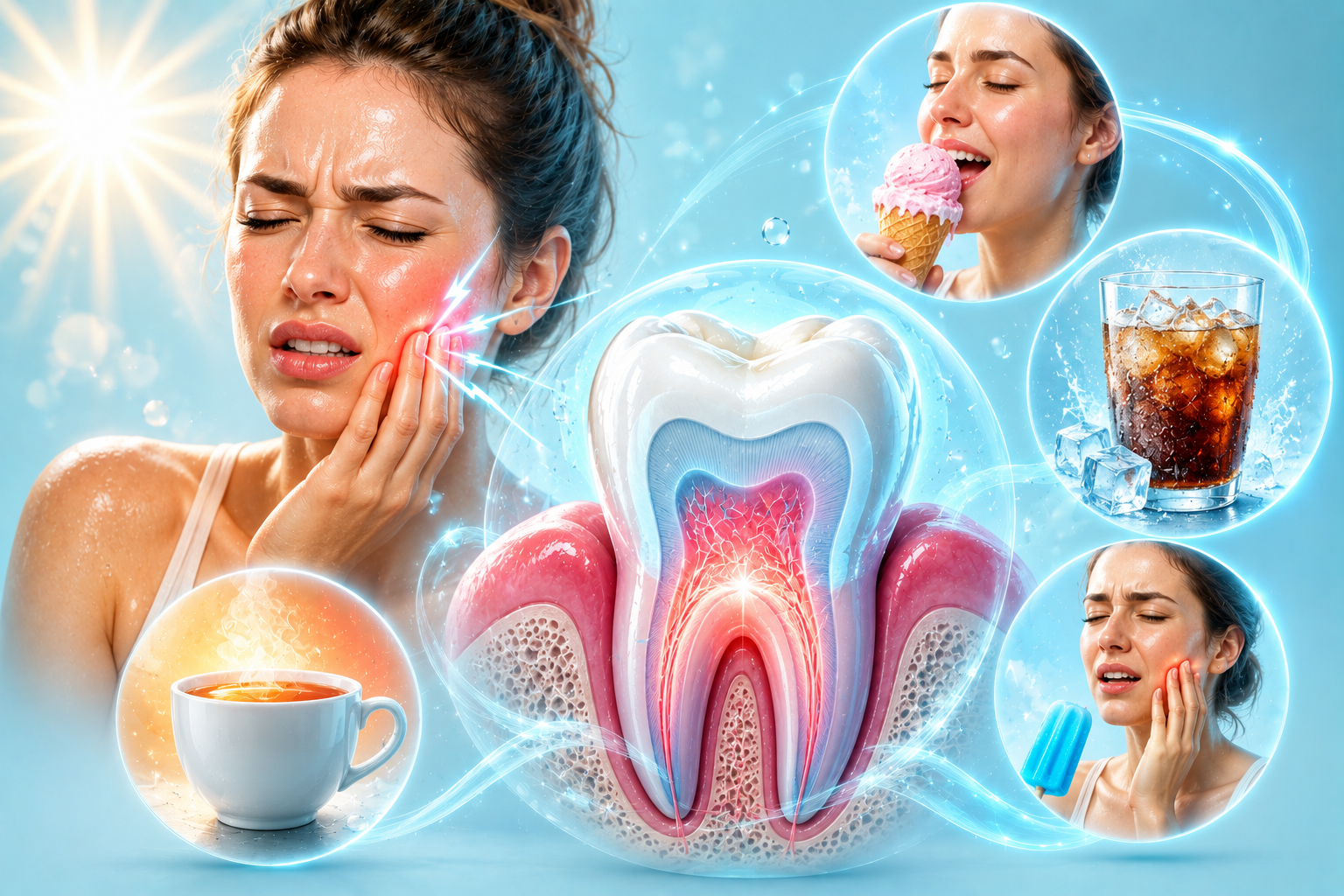
Other Summer Habits That May Worsen Sensitivity
Certain seasonal habits can unintentionally increase discomfort.
Increased acidic drink consumption
Frequent sipping of:
Lemon water
Fizzy drinks
Energy drinks
Iced fruit beverages
can increase enamel erosion risk.
Dehydration and dry mouth
Hot weather may reduce saliva production if fluid intake is inadequate.
Saliva helps:
Neutralise acids
Protect enamel
Wash away bacteria
Reduced saliva can leave teeth more vulnerable.
Teeth whitening overuse
Some people increase cosmetic treatments before holidays or events.
Excessive whitening use may temporarily increase tooth sensitivity in certain individuals.
Tips to Help Reduce Tooth Sensitivity During Hot Weather
Simple measures may help minimise discomfort and protect your teeth.
Use toothpaste designed for sensitive teeth
Sensitive toothpastes can help block pathways that trigger pain signals.
Consistent use is usually required for the best results.
Drink cold beverages carefully
Rather than holding ice-cold drinks against sensitive areas:
Use a straw when appropriate
Avoid chewing ice
Drink gradually
Maintain good hydration
Drinking water regularly supports saliva production and overall oral health.
Limit acidic drinks
Reducing frequent exposure to acidic beverages can help protect enamel.
If consumed:
Drink with meals where possible
Rinse with water afterwards
Brush gently
Use:
✔ A soft-bristled toothbrush
✔ Gentle circular brushing motions
✔ Fluoride toothpaste
Avoid excessive brushing pressure.
When Should You See a Dentist?
Occasional mild sensitivity may not always indicate a serious problem.
However, you should arrange a dental examination if:
Sensitivity becomes severe
Pain persists
One tooth suddenly becomes sensitive
Symptoms worsen over time
You notice swelling or gum problems
Persistent sensitivity may sometimes indicate:
Tooth decay
Cracks
Gum disease
Worn enamel
Dental infection
Early assessment helps identify the cause and prevent further problems.
Final Thoughts
Hot weather itself does not directly create tooth sensitivity, but summer habits such as consuming ice-cold drinks, frozen foods, and acidic beverages can make existing sensitivity more noticeable.
Enamel wear and exposed dentine often play a major role in triggering discomfort, particularly when teeth experience sudden temperature changes.
Maintaining good oral hygiene, staying hydrated, and seeking professional advice when symptoms persist can help keep your teeth comfortable all year round.
Book Your Consultation
At Euro Dental Care, we understand how tooth sensitivity can affect your comfort and everyday life. Our experienced dental team provides comprehensive assessments to identify the underlying cause of sensitivity and recommend personalised treatment options.
Whether you are experiencing occasional discomfort or ongoing sensitivity, we are here to help protect your smile and support your long-term oral health.
Book your appointment with Euro Dental Care today and enjoy a healthier, more comfortable smile in every season.