
Sports Injuries and Dental Emergencies: Signs You Should Never Ignore
Football and other contact sports are among the most popular activities in the UK, but they also come with a higher risk of injury. While most players expect the usual knocks, sprains, or bruises, dental injuries are often overlooked or underestimated.
A seemingly minor impact to the face or jaw during sport can lead to serious dental complications if not assessed quickly. In some cases, delaying treatment can result in permanent damage, infection, or even tooth loss.
This guide explains the key signs of sports-related dental emergencies you should never ignore, and when to seek urgent care from a dentist.
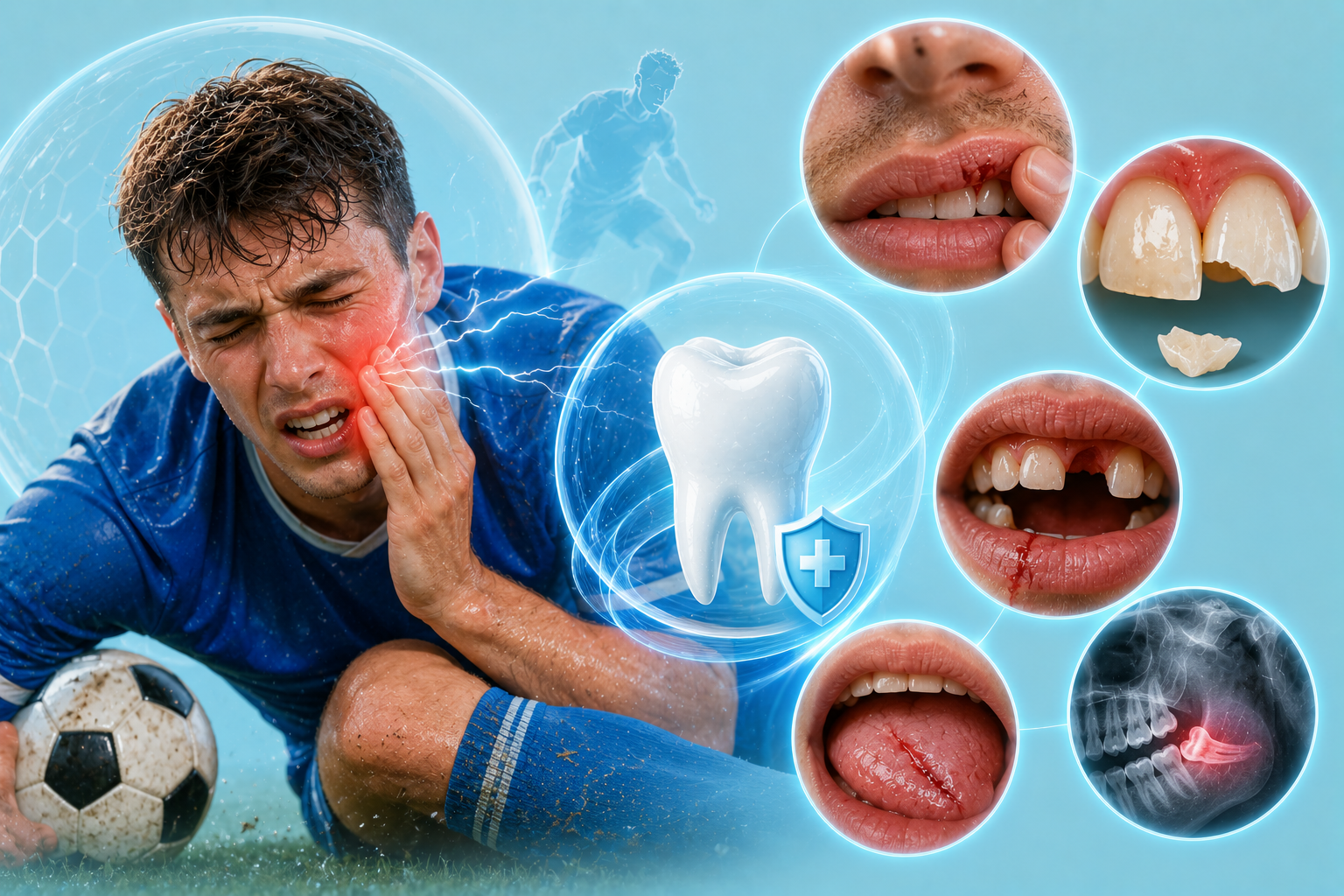
Why Sports Injuries Can Affect Your Teeth
During football or other high-impact sports, the face is vulnerable to:
Collisions with other players
Ball impact
Falls onto hard ground
Elbow or head contact
Even if a tooth is not visibly broken, the force of impact can still damage:
Tooth roots
Jawbone
Gum tissue
Supporting ligaments
Temporomandibular joint (TMJ)
Some injuries may not show immediate symptoms, which is why early assessment is essential.
Signs of a Dental Emergency After a Sports Injury
1. A Knocked-Out Tooth (Avulsed Tooth)
A completely knocked-out tooth is one of the most urgent dental emergencies.
Immediate treatment is critical because the chance of saving the tooth decreases significantly with time.
You should seek emergency dental care if:
A permanent tooth has been fully displaced
The tooth is loose in the socket
There is bleeding from the gum where the tooth was
Quick action within the first 30–60 minutes can make a major difference in saving the tooth.
2. A Chipped, Cracked, or Broken Tooth
Even small fractures should not be ignored after a sports injury.
Signs include:
Visible cracks or missing pieces
Sharp edges in the mouth
Pain when biting or chewing
Sensitivity to hot or cold foods
What may look like a minor chip can sometimes indicate deeper structural damage beneath the surface.
3. Tooth Pain After Impact
Pain after a sports injury is a warning sign that should never be ignored.
It may indicate:
Internal tooth trauma
Nerve damage
Root injury
Early infection
Pain that worsens over time or appears days after the injury should be checked promptly.
4. Loose or Moved Teeth
If a tooth feels different after a collision, it may have been displaced.
Signs include:
A tooth that feels “wobbly”
Changes in bite alignment
Teeth not fitting together properly
Discomfort when chewing
Even slight movement can suggest damage to the supporting structures of the tooth.
5. Bleeding or Swollen Gums After Injury
Bleeding gums may occur after trauma, but persistent symptoms should not be ignored.
Watch for:
Swelling around the gums or jaw
Bruising inside the mouth
Continued bleeding
Pain when touching the area
This may indicate soft tissue damage or underlying dental injury.
6. Jaw Pain or Difficulty Opening the Mouth
A blow to the face during football can affect more than just the teeth.
Jaw-related warning signs include:
Pain when opening or closing the mouth
Clicking or locking jaw
Swelling near the jawline
Difficulty chewing
These symptoms may indicate TMJ injury or even jawbone trauma.
7. Sensitivity That Develops After the Injury
Tooth sensitivity after a sports incident may appear mild at first but should be monitored.
It can indicate:
Enamel damage
Exposed dentine
Nerve irritation
Early tooth fracture
If sensitivity persists or worsens, dental assessment is recommended.
Why You Should Never Ignore Dental Sports Injuries
Delaying treatment can lead to complications such as:
Permanent tooth loss
Infection or abscess formation
Damage to surrounding teeth
Misalignment of bite
Long-term jaw problems
Increased treatment complexity later
What may start as a small issue after a football match can quickly develop into a more serious dental condition.
What to Do Immediately After a Dental Sports Injury
If a dental injury occurs during sport:
✔ Stay calm and assess the injury
✔ If a tooth is knocked out, handle it carefully
✔ Avoid touching the root surface
✔ Rinse gently if dirty (do not scrub)
✔ Seek emergency dental care immediately
✔ Use a cold compress for swelling
For knocked-out permanent teeth, time is critical. Prompt professional care offers the best chance of saving the tooth.
How Emergency Dentists Treat Sports Injuries
At an emergency dental appointment, treatment may include:
Reimplantation of knocked-out teeth
Dental splinting (stabilising loose teeth)
Repair of chipped or fractured teeth
Pain management and infection control
X-rays to assess hidden damage
Restorative treatment planning
The goal is to stabilise the injury and prevent long-term complications.
Preventing Dental Injuries in Football and Sports
Prevention plays a major role in reducing dental emergencies.
Recommended protective measures:
✔ Wear a custom-fitted sports mouthguard
✔ Avoid chewing gum during matches
✔ Follow proper warm-up routines
✔ Use appropriate protective gear
✔ Replace worn or ill-fitting mouthguards
Custom mouthguards are particularly effective in reducing the risk of broken or knocked-out teeth.
Final Thoughts
Sports injuries, especially in football, can sometimes lead to serious dental emergencies. While not every impact results in visible damage, symptoms such as tooth pain, looseness, fractures, jaw discomfort, or bleeding gums should never be ignored.
Early assessment is essential to prevent long-term complications and improve treatment outcomes.
Emergency Dental Care at Euro Dental Care
At Euro Dental Care, we understand that sports-related dental injuries require fast and effective treatment. Our experienced dental team provides emergency appointments for knocked-out teeth, fractures, and facial trauma, helping patients receive prompt care when they need it most.
Whether you play football regularly or experienced an unexpected injury, we are here to help protect your smile.
Book an emergency appointment with Euro Dental Care today and get immediate professional care for sports-related dental injuries.