
UK Heat Wave: How Extreme Heat Can Affect Your Oral Health
Heat waves across the UK are becoming increasingly common, with periods of unusually high temperatures affecting daily routines, energy levels, and overall health. While many people focus on preventing sunburn and heat exhaustion, oral health is often overlooked.
Extreme heat can have a surprising impact on your mouth. One of the biggest concerns during hot weather is dehydration, which can reduce saliva production and increase the risk of several dental problems.
Understanding how hot weather affects oral health can help you protect your teeth and gums throughout the summer months.
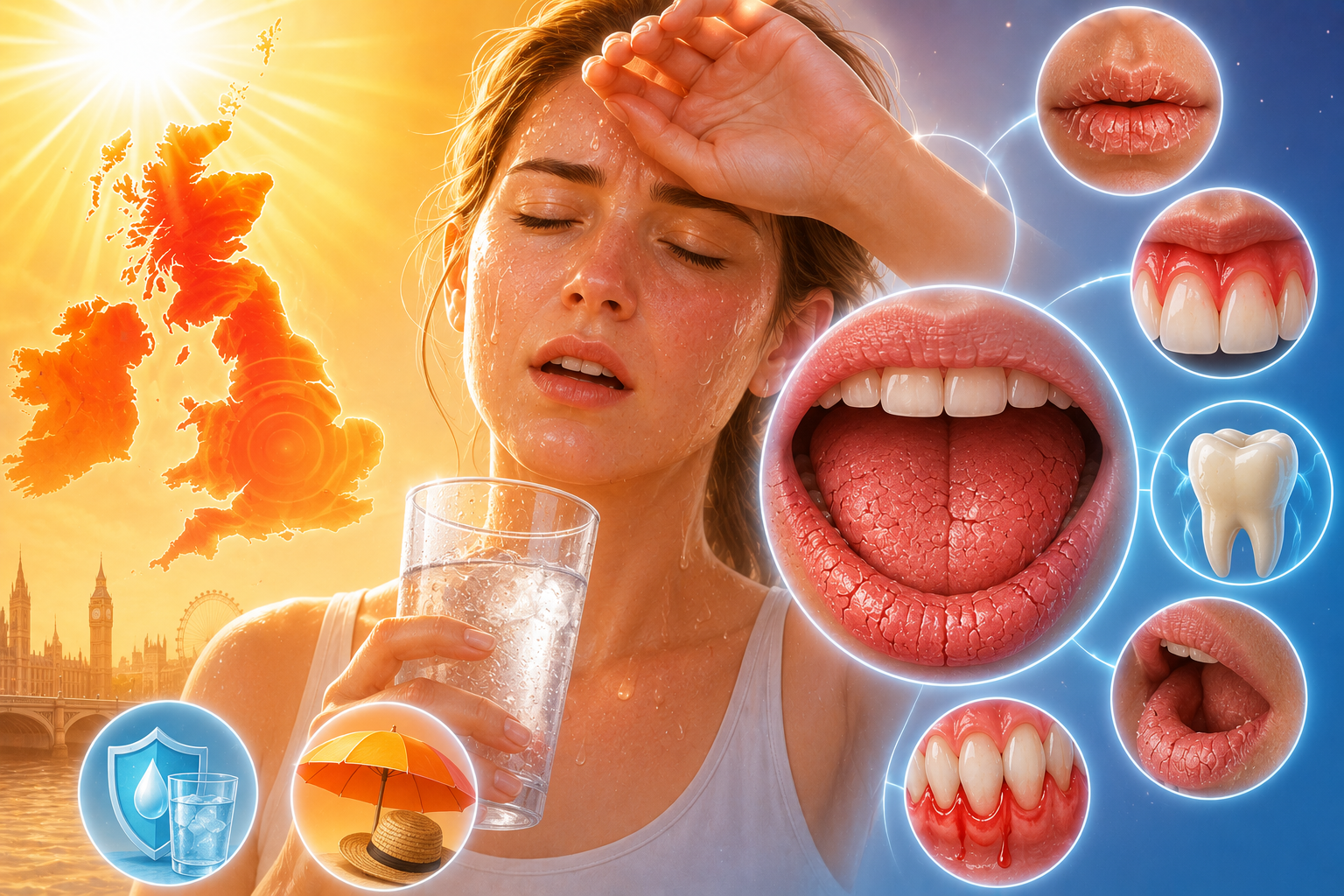
How Heat Waves Can Affect Your Oral Health
Your mouth depends on a healthy flow of saliva to function properly. Saliva does much more than keep your mouth comfortable. It plays an important role in protecting your teeth and maintaining oral health.
During periods of extreme heat, the body loses more fluids through sweating. If you do not replace these fluids adequately, dehydration can occur.
Even mild dehydration may affect the amount of saliva your body produces.
Why Saliva Is Important for Oral Health
Many people underestimate the role saliva plays in protecting the mouth.
Saliva helps to:
Wash away food particles
Neutralise acids produced by bacteria
Support enamel protection
Reduce bacterial growth
Keep oral tissues hydrated
Aid digestion and swallowing
When saliva production decreases, the mouth becomes more vulnerable to oral health problems.
Dehydration Reduces Saliva Production
During hot weather, the body naturally prioritises essential functions and fluid balance. If water intake becomes insufficient, saliva production may decrease.
Reduced saliva flow can result in:
A dry or sticky feeling in the mouth
Thick saliva
Increased thirst
Dry lips
Difficulty swallowing
Unpleasant breath
This condition is commonly referred to as dry mouth or xerostomia.
Some people may be more susceptible to dehydration-related dry mouth, including:
Older adults
Individuals taking certain medications
People who exercise outdoors frequently
Patients with certain medical conditions
How Dry Mouth Increases Cavity Risk
Saliva acts as one of the body's natural defence systems against tooth decay.
Without enough saliva:
Bacteria can multiply more easily
Saliva helps control bacteria inside the mouth. Reduced saliva may allow harmful bacteria to accumulate more rapidly.
Acids remain on teeth for longer
Bacteria feed on sugars and produce acids that weaken tooth enamel. Normally, saliva helps neutralise these acids.
Food debris may remain in the mouth
Reduced cleansing action means food particles can stay trapped around teeth for longer periods.
Together, these factors can increase the likelihood of:
Tooth decay
Bad breath
Gum irritation
Increased plaque accumulation
Tooth sensitivity
Hot weather itself does not directly cause cavities, but dehydration-related changes inside the mouth can create conditions that increase risk.
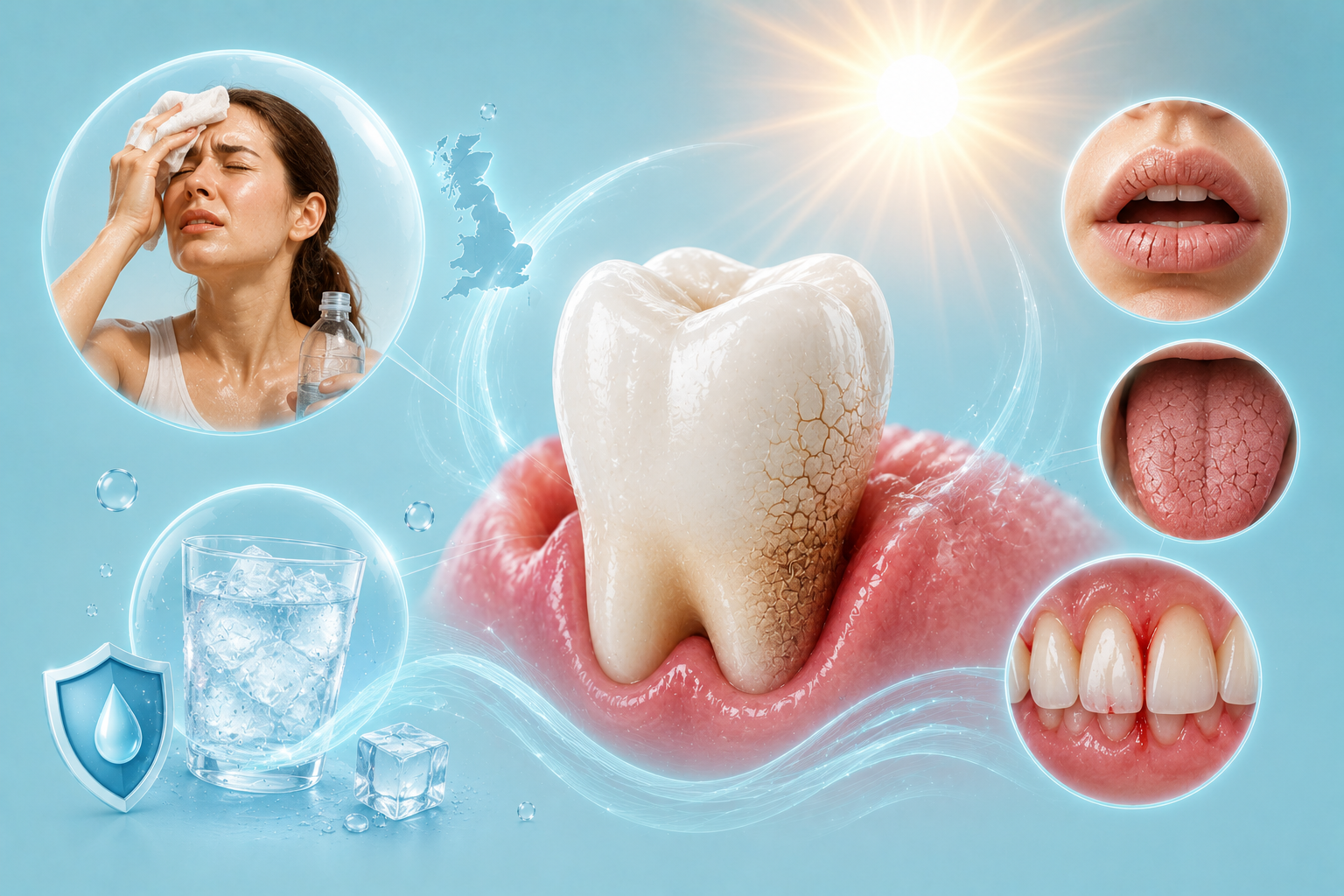
Summer Habits That May Affect Oral Health
Heat waves can sometimes lead to lifestyle changes that unintentionally affect oral health.
Common examples include:
Increased consumption of sugary drinks
Many people reach for:
Soft drinks
Sports drinks
Iced coffees
Energy drinks
Sweetened fruit beverages
Frequent consumption of sugary or acidic drinks may increase the risk of enamel erosion and tooth decay.
More frequent snacking
Summer holidays and outdoor activities can sometimes lead to increased snacking throughout the day, giving bacteria more opportunities to produce harmful acids.
Mouth breathing
Hot temperatures and allergies may contribute to mouth breathing, which can worsen dry mouth symptoms.
Tips for Staying Hydrated and Protecting Your Oral Health
Simple daily habits can help protect your teeth and gums during hot weather.
Drink water regularly
Water is the best choice for maintaining hydration and supporting saliva production.
Aim to drink consistently throughout the day rather than waiting until you feel very thirsty.
Carry a reusable water bottle
Keeping water nearby makes it easier to maintain fluid intake when travelling, working, or spending time outdoors.
Limit sugary and acidic drinks
If consuming soft drinks, sports drinks, or fruit juices:
Reduce frequency where possible
Drink them with meals
Rinse with water afterwards
Eat water-rich foods
Certain foods naturally contribute to hydration, including:
Cucumber
Watermelon
Strawberries
Celery
Lettuce
Oranges
Continue your normal oral hygiene routine
Even during holidays or busy summer schedules:
✔ Brush twice daily with fluoride toothpaste
✔ Floss or use interdental brushes daily
✔ Attend regular dental check-ups
✔ Avoid skipping oral hygiene routines
Consider sugar-free chewing gum
Sugar-free chewing gum may help stimulate saliva production between meals.
Products containing xylitol may also help reduce cavity-causing bacteria.
When Should You See a Dentist?
If you notice persistent symptoms such as:
Ongoing dry mouth
Increased tooth sensitivity
Bleeding gums
Persistent bad breath
Mouth discomfort
it may be worth arranging a dental examination.
Some symptoms may indicate underlying oral health concerns beyond simple dehydration.
Final Thoughts
UK heat waves can affect more than your comfort levels. Dehydration and reduced saliva production may increase the risk of dry mouth, cavities, and other oral health problems if left unmanaged.
Staying hydrated, making sensible drink choices, and maintaining good oral hygiene habits can help protect your smile during periods of extreme heat.
Book Your Consultation
At Euro Dental Care, we believe prevention remains the foundation of long-term oral health. Our experienced team provides comprehensive dental examinations, hygiene care, and personalised advice to help keep your teeth and gums healthy throughout every season.
Whether you are experiencing dry mouth symptoms or simply want to stay proactive about your dental health, we are here to help.
Book your appointment with Euro Dental Care today and keep your smile healthy, hydrated, and protected all summer long.