
How Custom Mouthguards Protect Your Smile During Contact Sports
Contact sports like football, rugby, boxing, and hockey are popular across the UK, but they also carry a higher risk of dental injuries. A sudden tackle, collision, or fall can easily lead to chipped teeth, knocked-out teeth, lip injuries, or jaw trauma.
One of the simplest and most effective ways to reduce this risk is by wearing a custom-fitted mouthguard.
In this guide, we explain how custom mouthguards protect your smile during sport, why they are more effective than over-the-counter options, and why they are especially important for football players.
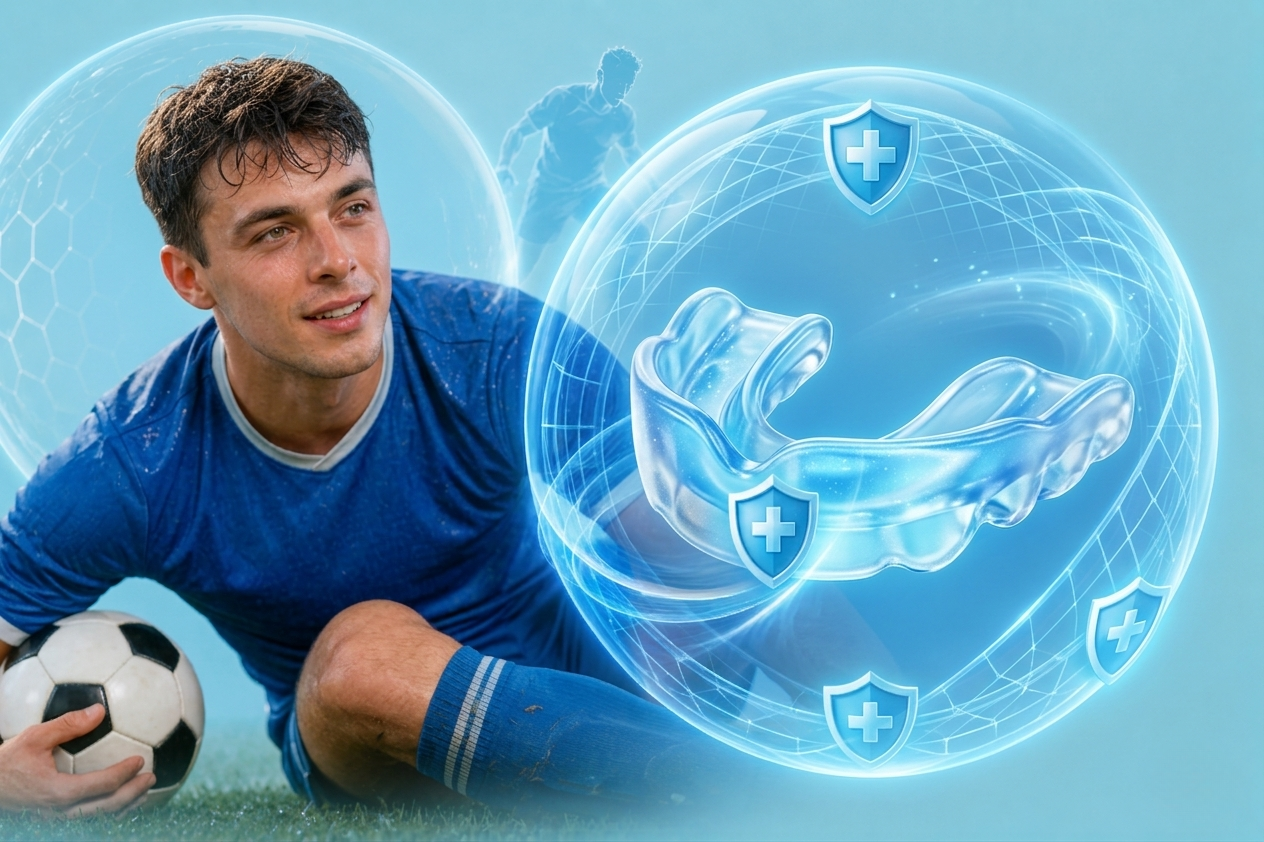
Why Dental Injuries Are Common in Contact Sports
During high-impact sports, the face is often exposed to accidental contact, including:
Elbows during tackles
Collisions between players
Ball impact to the face
Falls onto hard surfaces
Head or jaw contact
Even a single impact can cause significant dental damage. Common injuries include:
Chipped or fractured teeth
Knocked-out teeth
Soft tissue injuries (lips, cheeks, gums)
Jaw dislocation or TMJ strain
Tooth nerve damage
Many of these injuries require urgent or emergency dental treatment.
What Is a Custom Mouthguard?
A custom mouthguard is a protective dental device made specifically for your teeth and bite.
Unlike generic store-bought versions, a custom mouthguard is:
Individually designed by a dental professional
Moulded precisely to your teeth
Made using high-quality, durable materials
Comfortable and secure during movement
Because it is tailored to your mouth, it provides a much higher level of protection and stability.
How Custom Mouthguards Protect Your Teeth
1. Absorbing and distributing impact forces
When a collision occurs, a custom mouthguard absorbs shock and spreads the force across the teeth and jaw. This reduces the risk of a single tooth taking the full impact.
2. Preventing chipped and broken teeth
Direct blows to the mouth can easily fracture teeth. A mouthguard acts as a protective barrier, reducing contact between teeth and hard objects.
3. Reducing risk of knocked-out teeth
One of the most serious sports dental injuries is tooth avulsion (knocked-out tooth). A well-fitted mouthguard helps stabilise teeth and reduce movement during impact.
4. Protecting soft tissues
Mouthguards also shield:
Lips
Cheeks
Tongue
Gums
This helps prevent cuts, bruising, and internal mouth injuries.
5. Supporting jaw protection
By cushioning the bite, mouthguards can help reduce strain on the jaw joint (TMJ), lowering the risk of jaw pain or dislocation after impact.
Custom Mouthguards vs Shop-Bought Mouthguards
Many athletes use boil-and-bite or generic mouthguards, but these often provide limited protection.
Shop-bought mouthguards:
Poor fit
May feel bulky or uncomfortable
Can shift during play
Reduced shock absorption
More likely to be removed during sport
Custom mouthguards:
Precise fit
Better comfort and breathing
Stronger protection
Stay securely in place
Designed for your sport and bite alignment
For football players, where fast movement and constant contact are common, fit and stability are especially important.
Why Football Players Especially Need Mouthguards
Football is one of the most common causes of dental sports injuries in the UK due to:
Frequent tackles and collisions
Elbows and accidental contact
High-speed ball impact
Close player proximity
Even non-contact positions are not risk-free.
A properly fitted mouthguard can significantly reduce the likelihood of:
Emergency dental visits
Tooth loss
Long-term dental restoration needs
What Happens If You Don’t Wear a Mouthguard?
Without protection, even a minor impact can lead to:
Immediate tooth fracture
Permanent tooth loss
Costly dental treatments (crowns, implants, bridges)
Long recovery time
Ongoing sensitivity or nerve damage
In many cases, prevention is far simpler than treatment.
How Custom Mouthguards Are Made
At a dental clinic, the process usually involves:
Dental examination
Impression or digital scan of your teeth
Custom fabrication in a dental lab
Fitting appointment to ensure comfort and accuracy
Advice on care and maintenance
The result is a mouthguard designed specifically for your bite and sport.
How to Care for Your Mouthguard
To keep your mouthguard in good condition:
✔ Rinse after each use
✔ Clean with a soft toothbrush and mild soap
✔ Store in a ventilated protective case
✔ Avoid exposure to heat or direct sunlight
✔ Check regularly for wear or damage
A well-maintained mouthguard provides consistent protection throughout the season.
When Should You Replace a Mouthguard?
You should consider replacement if:
It becomes loose or uncomfortable
It shows signs of wear or cracks
Your teeth shift or change alignment
It no longer fits securely
Young athletes may need more frequent replacements due to dental development.
Final Thoughts
Custom mouthguards are a crucial piece of protective equipment for anyone participating in contact sports, especially football. They help prevent serious dental injuries, reduce emergency treatment needs, and protect both teeth and surrounding oral structures.
Investing in a properly fitted mouthguard is a simple step that can save you from pain, costly treatment, and long-term dental complications.
Sports Dental Protection at Euro Dental Care
At Euro Dental Care, we provide custom-made mouthguards designed for maximum protection and comfort during sports activities. Whether you are a football player, athlete, or parent looking to protect a young sports enthusiast, our dental team ensures a precise fit tailored to your needs.
We also provide emergency dental care for sports-related injuries, including chipped, broken, or knocked-out teeth.
Book your appointment with Euro Dental Care today and protect your smile before the next match.