
Invisalign vs Traditional Braces
A straight, well-aligned smile can improve both your confidence and your oral health. If you are considering orthodontic treatment to correct crooked teeth, gaps, or bite problems, you may be comparing Invisalign vs traditional braces to determine which option is right for you.
Both treatments are highly effective in addressing common orthodontic concerns such as misaligned teeth, crowding, spacing issues, and bite irregularities. However, Invisalign and traditional metal braces differ in several important ways, including appearance, comfort, maintenance, and the overall treatment experience.
Understanding how Invisalign clear aligners work compared to traditional braces can help you make an informed decision about the most suitable orthodontic treatment for your smile goals, lifestyle, and long-term oral health.
How Invisalign Works: A Modern Approach to Straightening Your Teeth
A straighter smile no longer requires traditional metal braces. Invisalign offers a discreet and comfortable way to correct misaligned teeth using clear, removable aligners that are virtually invisible. This innovative orthodontic treatment allows patients to straighten their teeth while maintaining a natural appearance throughout the process.
Invisalign treatment uses a series of custom-made clear aligners designed to gradually move your teeth into proper alignment. These aligners are made from smooth, transparent plastic and are carefully crafted to fit snugly over your teeth, providing gentle and controlled tooth movement.
The Invisalign Treatment Process
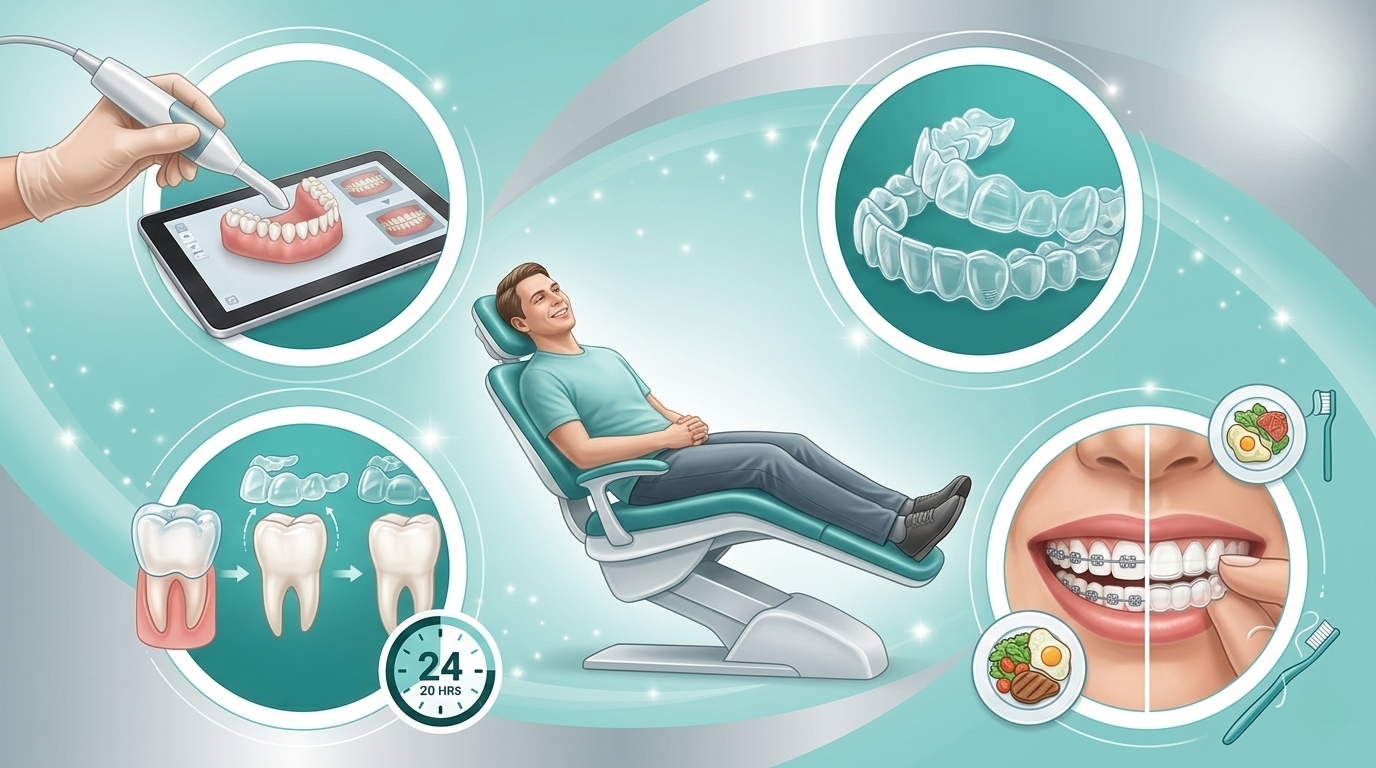
Digital Scan and Treatment Planning
Your dentist begins with a digital scan of your teeth to create a precise 3D model. This allows for detailed treatment planning and a preview of how your smile will improve over time.Custom Fabrication of Clear Aligners
Based on your personalised treatment plan, a series of custom Invisalign aligners is created to gradually shift your teeth into the desired position.Wearing Each Set of Aligners
Each set of aligners is typically worn for one to two weeks before progressing to the next set in the series.Gradual Tooth Movement
As you switch to new aligners, your teeth gradually move into proper alignment according to the treatment plan.Regular Dental Check-ups
Periodic appointments with your dentist allow them to monitor your progress and ensure the treatment is moving as planned.
For optimal results, Invisalign aligners should be worn for 20 to 22 hours per day. They can be conveniently removed when eating, brushing, and flossing, making them a flexible and convenient alternative to traditional braces.
What Are Traditional Braces?
While modern orthodontic options such as Invisalign are increasingly popular, traditional braces remain one of the most effective methods for correcting complex dental alignment issues. Braces have been used in orthodontics for many years and continue to provide reliable and predictable results for patients of all ages.
Traditional braces use metal brackets that are bonded to the surface of each tooth and connected by archwires. These wires apply gentle, controlled pressure that gradually moves the teeth into the correct position over time.
How Traditional Braces Work
The braces treatment process involves several key components:
Brackets are attached to each tooth, acting as anchors for the orthodontic system
Archwires connect the brackets and guide the gradual movement of teeth into proper alignment
Elastic bands may be used to help correct bite problems and improve jaw alignment
Regular orthodontic adjustments are required to tighten or reposition the wires and maintain progress
Unlike clear aligners, metal braces remain fixed in place throughout the entire treatment period and cannot be removed by the patient. This constant pressure allows braces to effectively correct more complex orthodontic issues, including severe misalignment and bite problems.
Pros and Cons: Invisalign vs Traditional Braces
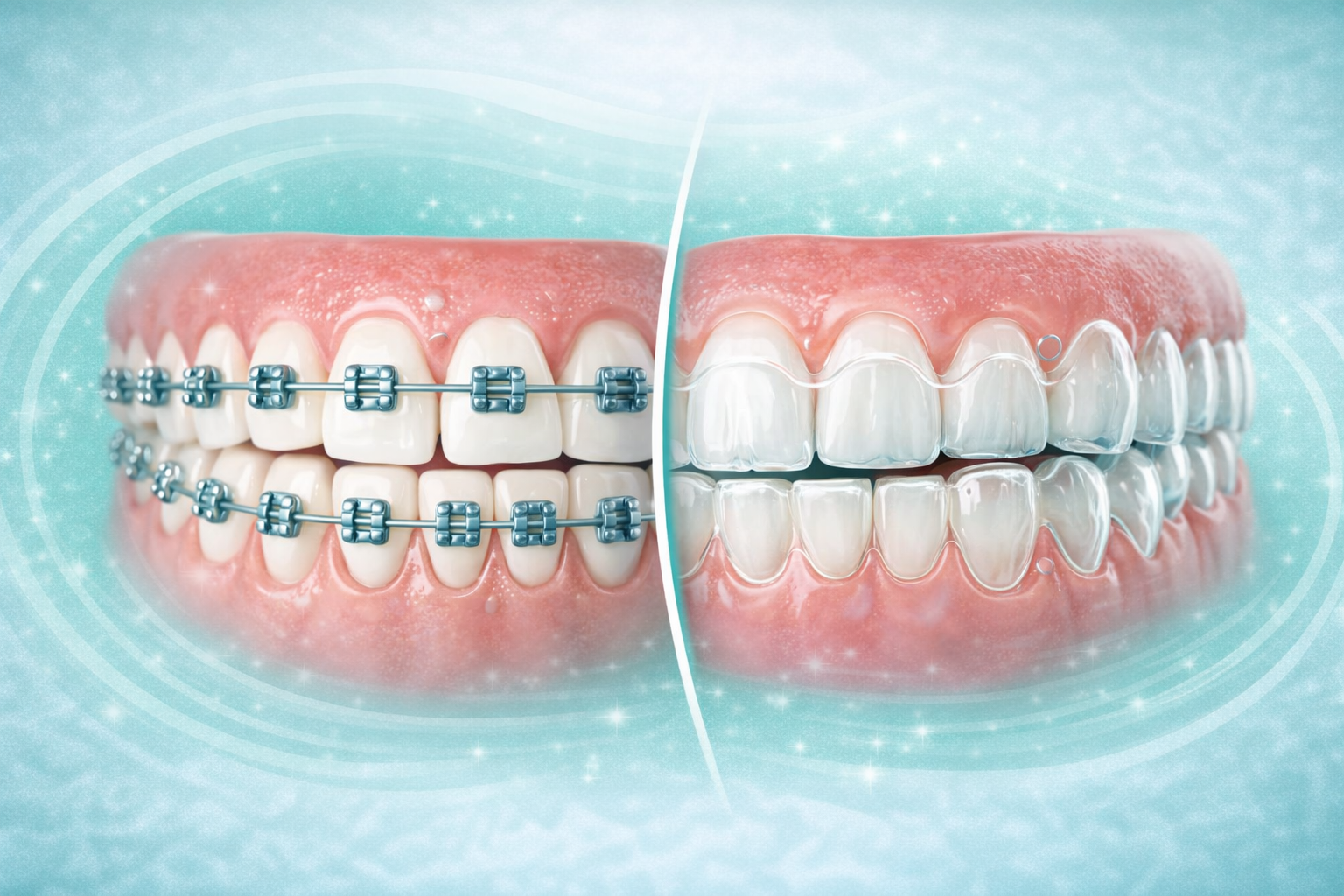
When considering orthodontic treatment to straighten your teeth, many patients compare Invisalign and traditional braces. Both options are effective for improving tooth alignment and enhancing your smile, but the right choice will depend on your dental needs, lifestyle, and personal preferences.
Invisalign: Advantages
Invisalign has become a popular choice for patients seeking a discreet and comfortable orthodontic treatment.
Nearly invisible appearance, making it ideal for adults and professionals
Removable aligners, allowing you to eat, brush, and floss normally
More comfortable fit, with smooth plastic aligners and no metal brackets or wires
Fewer dietary restrictions, since aligners can be removed during meals
Invisalign: Considerations
While Invisalign offers many benefits, it may not be suitable for every orthodontic case.
Requires discipline, as aligners must be worn for 20–22 hours per day
May be less suitable for complex orthodontic issues requiring significant tooth movement
Aligners can be misplaced if not stored properly
Traditional Braces: Advantages
Traditional braces remain a reliable and effective orthodontic treatment for a wide range of cases.
Highly effective for both mild and complex orthodontic conditions
Fixed in place, so there is no need to remember to wear them
Often recommended for children and teenagers who may find removable aligners difficult to manage
Traditional Braces: Considerations
Despite their effectiveness, traditional braces may have some limitations.
Visible metal brackets and wires, which some patients find less aesthetically appealing
Certain food restrictions, as hard or sticky foods can damage brackets
More challenging oral hygiene, requiring extra care when brushing and flossing
Possible irritation to the cheeks or gums from wires and brackets
A professional orthodontic consultation with your dentist will help determine whether Invisalign or traditional braces is the most suitable option for achieving a straighter, healthier smile.
Treatment Duration: How Long Does It Take?
The length of orthodontic treatment varies depending on the severity of tooth misalignment, the complexity of the case, and the type of treatment chosen. Both Invisalign and traditional braces are effective options for straightening teeth, but the treatment timeline can differ based on individual needs.
Invisalign Treatment Duration
Most patients undergoing Invisalign treatment complete their orthodontic journey within 12 to 18 months. However, patients with mild alignment issues may achieve their desired results in a shorter period. Because Invisalign uses a series of custom clear aligners to gradually move the teeth, treatment progress depends on wearing the aligners consistently for 20 to 22 hours per day.
Traditional Braces Treatment Duration
Traditional braces typically require 18 to 24 months to achieve optimal results. For more complex orthodontic cases involving significant tooth movement or bite correction, treatment may take longer.
During your orthodontic consultation, your dentist or orthodontist will assess your teeth, bite alignment, and overall oral health to provide a personalised treatment timeline. This evaluation helps determine the most effective approach for achieving a straighter, healthier smile.
Who Is an Ideal Candidate for Invisalign or Traditional Braces?
Choosing between Invisalign and traditional braces depends on several factors, including the severity of tooth misalignment, your lifestyle, and your personal treatment preferences. A professional orthodontic consultation will help determine the most suitable option for achieving a straighter, healthier smile.
Ideal Candidates for Invisalign
Invisalign treatment is often recommended for patients who prefer a discreet and flexible orthodontic solution. You may be an ideal candidate for Invisalign if you:
Have mild to moderate crowding or spacing between teeth
Want a nearly invisible orthodontic treatment option
Prefer removable aligners that allow you to eat and clean your teeth easily
Are committed to wearing the aligners for 20–22 hours per day
Maintain good oral hygiene habits throughout treatment
Many adults and teenagers choose Invisalign because the clear aligners provide a subtle and comfortable way to straighten teeth without the appearance of traditional metal braces.
Ideal Candidates for Traditional Braces
Traditional braces may be recommended for patients with more complex orthodontic concerns or those who prefer a fixed treatment option.
You may be a better candidate for traditional braces if you:
Have severe tooth misalignment or bite issues
Require significant tooth rotation or complex orthodontic correction
Prefer a fixed appliance that remains in place throughout treatment
Are a younger patient who may find removable aligners difficult to manage
Traditional braces remain one of the most reliable and effective orthodontic treatments for correcting complex alignment issues and achieving long-term dental stability.
Frequently Asked Questions (FAQs)
-
Yes, Invisalign can be highly effective for correcting mild to moderate orthodontic issues, including crowding, spacing, and minor bite problems. However, more complex cases involving significant tooth movement or bite correction may be better suited to traditional braces. A professional orthodontic assessment will determine the most appropriate treatment for your needs.
-
Most patients experience only mild pressure or discomfort when switching to a new set of aligners. This sensation indicates that the aligners are gradually moving the teeth into their correct positions. Any discomfort is typically temporary and usually subsides within a few days.
-
Treatment duration varies depending on the complexity of the orthodontic case and patient compliance with treatment instructions. In some cases, Invisalign may achieve results in a similar timeframe to traditional braces, particularly when aligners are worn for the recommended 20–22 hours per day.
-
Yes. Invisalign offers treatment options specifically designed for teenagers, allowing younger patients to straighten their teeth using clear, removable aligners. Invisalign Teen includes features that help monitor aligner wear and accommodate developing teeth.
-
For optimal results, Invisalign aligners must be worn for 20 to 22 hours each day. If aligners are not worn consistently, treatment progress may slow down, potentially extending the overall treatment time and affecting the final results.
-
The cost of Invisalign and traditional braces is often comparable, although pricing can vary depending on the complexity of the case and the length of treatment. The most accurate way to determine the cost is through a personalised orthodontic consultation, where your dentist can assess your needs and discuss available treatment and payment options.
Book Your Consultation
If you are ready to achieve a straighter and more confident smile, now is the perfect time to explore your orthodontic treatment options. Whether you are considering Invisalign clear aligners or traditional braces, a professional consultation will help determine the most suitable solution for improving your smile and bite alignment.
During your consultation, our experienced dental team will assess your teeth and overall oral health, discuss your treatment goals, and create a personalised orthodontic treatment plan tailored to your needs.
Book your consultation today and take the first step towards a healthier, straighter, and more confident smile.