
Teeth Grinding at Night: Causes, Effects, and Treatment Options
Teeth grinding at night, also known as sleep bruxism, is a common condition where a person unconsciously clenches or grinds their teeth during sleep. Many people are unaware they do it until symptoms appear or a partner notices the sound.
While occasional grinding may not cause serious harm, long-term or severe bruxism can lead to tooth damage, jaw pain, headaches, and other oral health problems.
In this article, we explain the causes, effects, and treatment options for night-time teeth grinding in a clear, dentist-informed way.
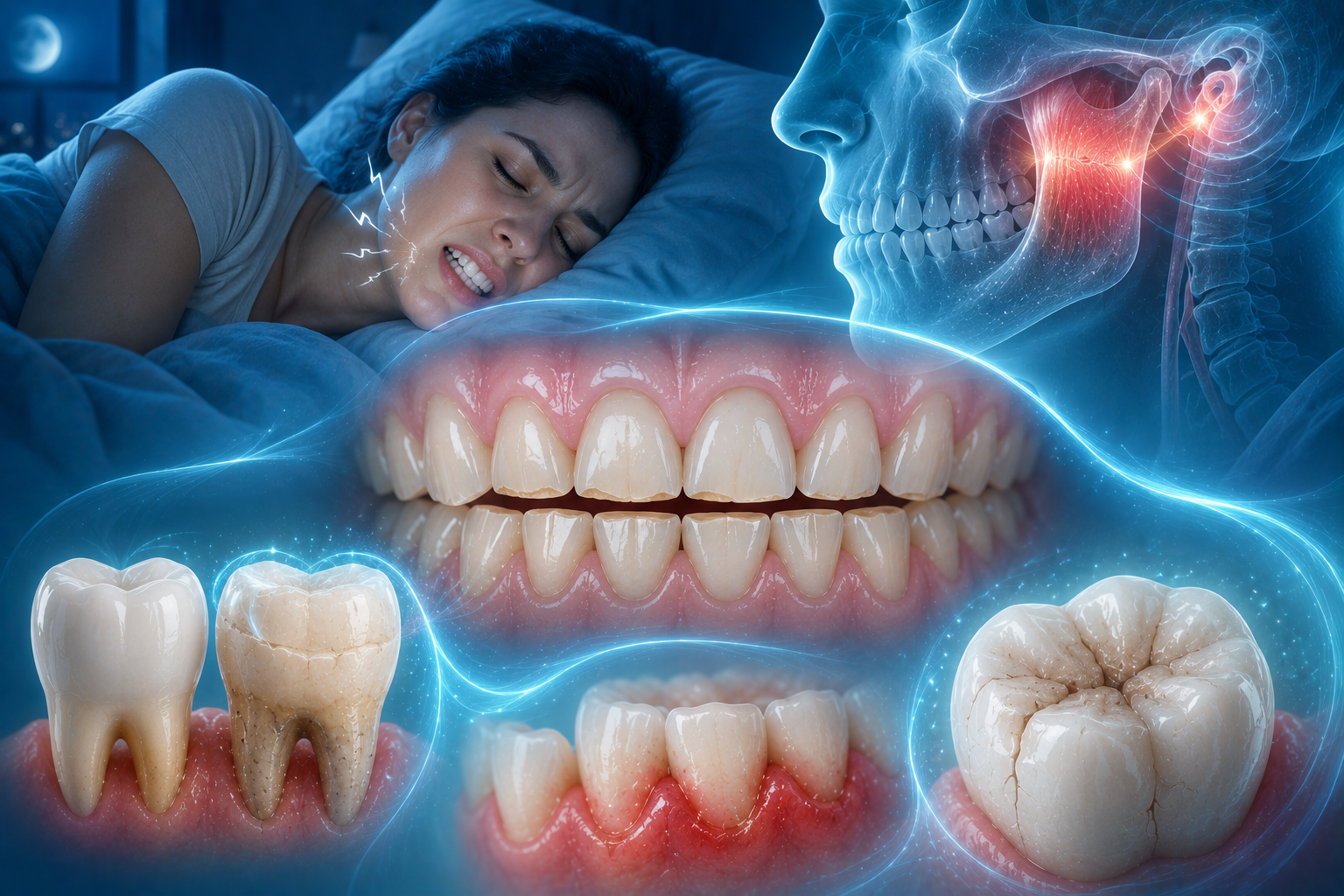
What Is Sleep Bruxism?
Sleep bruxism is a type of involuntary jaw activity that occurs during sleep. It may involve:
● Grinding teeth back and forth
● Clenching the jaw tightly
● Repeated jaw muscle activity
It is classified as a sleep-related movement disorder and often occurs without conscious awareness.
Causes of Teeth Grinding at Night
There is no single cause of bruxism. Instead, it is usually linked to a combination of physical, psychological, and lifestyle factors.
1. Stress and anxiety
One of the most common contributing factors is stress. Emotional tension can lead to increased jaw muscle activity during sleep.
2. Sleep disorders
Conditions such as:
● Sleep apnea
● Snoring
● Interrupted sleep cycles
may increase the likelihood of bruxism.
3. Bite misalignment (malocclusion)
If teeth do not align properly, the jaw may compensate by grinding or clenching.
4. Lifestyle factors
Certain habits may increase risk, including:
● High caffeine intake
● Alcohol consumption
● Smoking
● Stimulant medications in some cases
5. Neurological and genetic factors
Research suggests a genetic component in some individuals, meaning bruxism can run in families.
Signs and Symptoms of Night Grinding
Many people are unaware they grind their teeth until symptoms develop. Common signs include:
● Jaw pain or tightness
● Headaches, especially in the morning
● Worn, flattened, or chipped teeth
● Tooth sensitivity
● Clicking or popping jaw sounds
● Disrupted sleep
● Facial muscle soreness
In some cases, a partner may hear grinding sounds during the night.
Effects of Untreated Teeth Grinding
If left untreated, sleep bruxism can lead to more serious dental and jaw complications.
1. Tooth wear and damage
Constant grinding can wear down enamel, leading to:
● Shortened teeth
● Cracks or fractures
● Increased sensitivity
2. Jaw disorders (TMJ problems)
Excessive pressure on the jaw joint can contribute to temporomandibular joint (TMJ) dysfunction, causing pain and restricted movement.
3. Gum and tooth support strain
Severe clenching can place stress on the ligaments supporting teeth, sometimes causing looseness over time.
4. Headaches and facial pain
Muscle overuse during the night can result in morning headaches and facial discomfort.
5. Sleep disruption
Although bruxism occurs during sleep, it can affect sleep quality and lead to tiredness during the day.
How Dentists Diagnose Teeth Grinding
Dentists diagnose bruxism based on:
● Clinical examination of tooth wear
● Patient symptoms (pain, sensitivity)
● Jaw muscle tenderness
● Reports from partners (grinding sounds)
In some cases, further sleep assessment may be recommended if a sleep disorder is suspected.
Treatment Options for Night Grinding
Treatment focuses on protecting the teeth and addressing underlying causes.
1. Custom night guards (occlusal splints)
One of the most effective treatments is a custom-made night guard. This device:
● Fits over the teeth during sleep
● Prevents direct tooth-to-tooth contact
● Reduces wear and damage
● Helps relax jaw muscles
Unlike over-the-counter guards, custom appliances are tailored for comfort and protection.
2. Stress management
Since stress is a major trigger, techniques may include:
● Relaxation exercises
● Mindfulness or meditation
● Improved sleep hygiene
● Lifestyle adjustments
3. Dental correction (if needed)
If bite alignment contributes to grinding, your dentist may assess whether:
● Restorative work
● Orthodontic treatment is appropriate.
4. Reducing stimulants
Limiting:
● Caffeine (especially in the evening)
● Alcohol
● Smoking
may reduce bruxism severity in some patients.
5. Treating underlying sleep disorders
If sleep apnea or other disorders are suspected, referral to a sleep specialist may be recommended.
Can Teeth Grinding Be Cured?
There is no single permanent “cure” for bruxism in all cases. However, it can often be
managed effectively with a combination of protective devices and lifestyle changes. Many patients experience significant symptom relief once treatment begins.
When Should You See a Dentist?
You should book a dental appointment if you notice:
● Worn or chipped teeth
● Morning jaw pain or headaches
● Tooth sensitivity
● Clicking jaw joints
● Disturbed sleep symptoms
● Facial muscle tightness
Early diagnosis helps prevent long-term damage.
Final Thoughts
Teeth grinding at night is a common condition that often goes unnoticed until damage begins to appear. While stress and lifestyle factors are often involved, untreated bruxism can lead to serious dental wear, jaw pain, and ongoing discomfort.
The good news is that with early diagnosis and the right treatment, especially custom night guards, most patients can successfully manage the condition and protect their teeth.
Book Your Consultation
At Euro Dental Care, we provide professional assessment and treatment for teeth grinding and jaw-related discomfort. Our custom-made night guards are designed to protect your teeth, reduce strain, and improve sleep comfort.
If you are experiencing jaw pain, headaches, or signs of tooth wear, our dental team is here to help.
Book your appointment with Euro Dental Care today and take the first step toward protecting your smile while you sleep.