
Why Proper Chewing Is Essential for Better Digestion and Overall Health
Chewing is often overlooked as a simple everyday habit, but it plays a crucial role in both oral health and overall digestion. Many people eat quickly due to busy lifestyles, stress, or distractions, but poor chewing habits can affect not only your stomach, but also your teeth, jaw, and long-term wellbeing.
In this article, we explore why proper chewing is essential, how it supports digestion, and what can happen when you don’t chew your food properly.
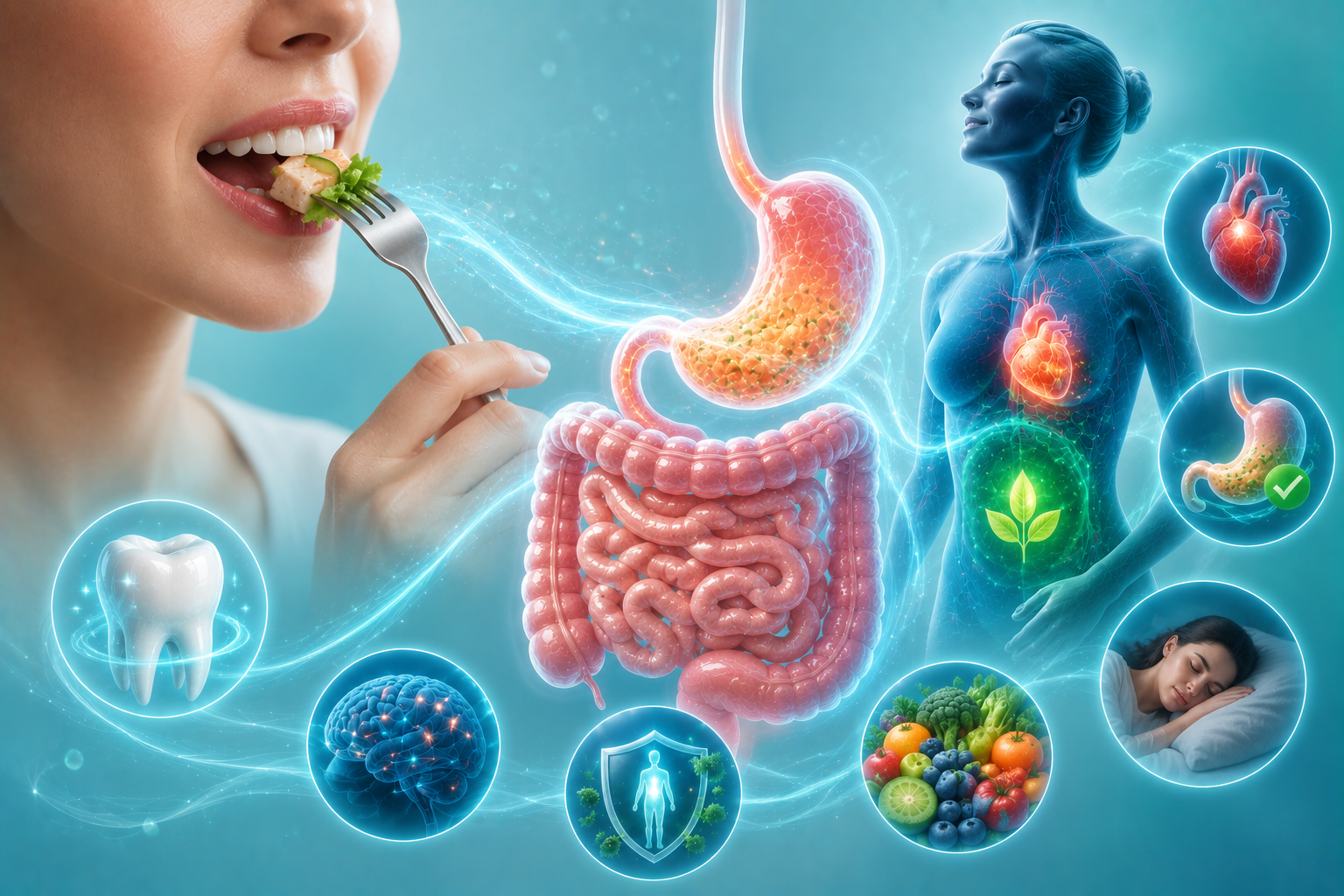
What Happens When You Chew Properly?
Chewing is the first stage of digestion. Before food reaches your stomach, your mouth begins breaking it down mechanically and chemically.
When you chew properly, you:
Break food into smaller, easier-to-digest pieces
Mix food with saliva, which contains digestive enzymes
Support smoother swallowing
Reduce strain on the digestive system
Saliva is especially important because it begins the breakdown of carbohydrates and helps protect your teeth from acids and bacteria.
How Chewing Supports Better Digestion
1. Reduces strain on the stomach
When food is properly chewed, the stomach does not have to work as hard to break it down. This improves digestion efficiency and may reduce symptoms such as bloating and indigestion.
2. Improves nutrient absorption
Smaller food particles are easier for the body to process, allowing nutrients to be absorbed more effectively in the intestines.
3. Activates digestive enzymes
Saliva contains enzymes such as amylase, which begin breaking down carbohydrates in the mouth. This early process improves overall digestion.
The Link Between Chewing and Oral Health
Proper chewing is not only important for digestion—it also plays a role in maintaining a healthy mouth.
Benefits for oral health include:
Stimulates saliva production, which protects teeth
Helps naturally clean the mouth during eating
Supports jaw muscle strength and function
Encourages balanced bite pressure across teeth
Chewing also helps maintain healthy function of the temporomandibular joint (TMJ).
What Happens If You Don’t Chew Properly?
Eating too quickly or failing to chew food thoroughly can lead to several issues.
1. Digestive problems
Poor chewing may contribute to:
Bloating
Indigestion
Acid reflux
Abdominal discomfort
2. Increased risk of overeating
Your brain needs time to register fullness. Eating too quickly may cause you to eat more than your body needs, increasing the risk of weight gain.
3. Jaw strain and discomfort
Chewing too aggressively or unevenly can place extra pressure on certain teeth and jaw muscles, potentially contributing to:
Jaw pain
Muscle fatigue
TMJ discomfort
4. Poor oral health outcomes
Inadequate chewing reduces saliva stimulation, which may increase:
Plaque buildup
Risk of tooth decay
Bad breath
Signs You May Not Be Chewing Properly
You may benefit from improving your chewing habits if you notice:
Frequently swallowing food quickly
Digestive discomfort after meals
Jaw fatigue or pain
Uneven wear on teeth
Food not feeling fully broken down before swallowing
How to Improve Your Chewing Habits
1. Slow down during meals
Take your time and avoid rushing. Try putting your fork down between bites.
2. Chew each bite thoroughly
Aim to chew each mouthful until it becomes soft and easy to swallow.
3. Avoid distractions
Eating while watching TV or using your phone can lead to unconscious fast eating.
4. Drink water during meals
Sipping water can help soften food and support digestion.
5. Be mindful of portion sizes
Smaller bites encourage better chewing and easier digestion.
Can Dental Problems Affect Chewing?
Yes. Dental issues can significantly impact your ability to chew properly. These may include:
Missing teeth
Tooth pain or sensitivity
Poorly fitted dentures
Bite misalignment
Jaw joint problems
If chewing becomes uncomfortable, it is important to seek dental advice.
When Should You See a Dentist?
You should book a dental appointment if you experience:
Difficulty chewing food
Jaw pain while eating
Tooth sensitivity or pain
Clicking or locking jaw
Missing or damaged teeth affecting bite
Early treatment can improve both comfort and function.
Final Thoughts
Proper chewing is a simple but powerful habit that supports both digestive health and oral wellbeing. Taking the time to chew your food thoroughly can improve nutrient absorption, reduce digestive discomfort, and protect your teeth and jaw from unnecessary strain.
Small changes in eating habits can make a big difference to your long-term health.
Book Your Consultation
At Euro Dental Care, we focus on helping patients maintain healthy teeth, strong bites, and long-term oral function. If you are experiencing difficulty chewing, jaw discomfort, or dental pain, our experienced team can assess the underlying cause and provide personalised treatment options.
Book your appointment with Euro Dental Care today and take a step toward better oral health and overall wellbeing.