
What Is an Impacted Wisdom Tooth? Everything You Need to Know
Wisdom teeth are the last set of permanent teeth to develop and usually emerge during the late teenage years or early adulthood. While some people experience no problems when their wisdom teeth come through, others may develop a common dental issue known as an impacted wisdom tooth.
Impacted wisdom teeth can sometimes remain symptom-free, but in other cases they may lead to pain, swelling, infection, or complications affecting nearby teeth and gums.
In this guide, we explain what an impacted wisdom tooth is, why it happens, common symptoms, treatment options, and when you should seek professional dental advice.
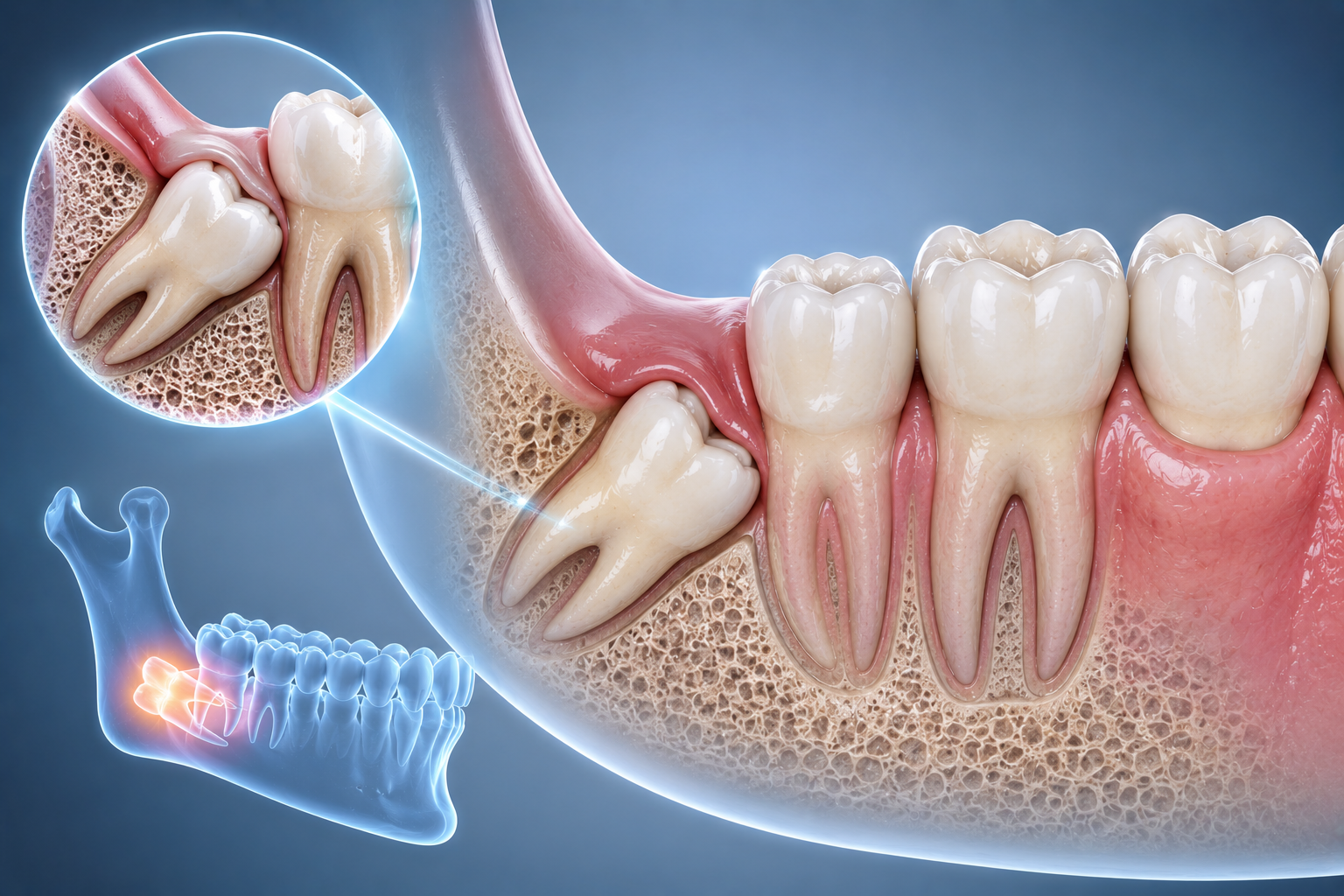
What Is an Impacted Wisdom Tooth?
An impacted wisdom tooth is a wisdom tooth that does not fully emerge into its proper position in the mouth.
This occurs when there is not enough space in the jaw for the tooth to grow normally or when the tooth develops at an unusual angle.
An impacted tooth may:
Remain completely below the gum line
Partially erupt through the gums
Grow sideways or at an angle
Push against neighbouring teeth
Some impacted wisdom teeth remain unnoticed for years, while others may cause symptoms and require treatment.
What Are Wisdom Teeth?
Wisdom teeth, also known as third molars, are located at the back of the mouth.
Most adults have up to four wisdom teeth:
Two in the upper jaw
Two in the lower jaw
They typically begin developing between the ages of 17 and 25, although this can vary from person to person.
Historically, wisdom teeth may have helped our ancestors chew tougher diets, but modern diets and changes in jaw size often mean they are no longer essential.
Why Do Wisdom Teeth Become Impacted?
Several factors can contribute to wisdom tooth impaction.
Common causes include:
Lack of space in the jaw
Modern jaw structures are often smaller, leaving insufficient room for wisdom teeth to emerge properly.
Abnormal tooth positioning
The tooth may grow at an angle instead of erupting vertically.
Blockage by neighbouring teeth
Existing teeth may obstruct the path of eruption.
Development beneath bone or gum tissue
Some wisdom teeth remain trapped beneath surrounding tissues.
Types of Impacted Wisdom Teeth
Impacted wisdom teeth can occur in different positions.
Vertical Impaction
The tooth develops in a relatively normal position but cannot fully emerge.
Horizontal Impaction
The tooth grows sideways and may push directly against neighbouring teeth.
Mesial Impaction
The tooth tilts forward toward adjacent teeth.
Distal Impaction
The tooth angles toward the back of the mouth.
The position of the tooth often influences symptoms and treatment planning.
Symptoms of an Impacted Wisdom Tooth
Not all impacted wisdom teeth cause noticeable symptoms. However, when problems develop, common signs may include:
Pain at the back of the mouth
Jaw discomfort
Swollen or tender gums
Redness around the wisdom tooth area
Difficulty opening the mouth fully
Bad breath
Unpleasant taste in the mouth
Food becoming trapped around the tooth
Headaches or facial discomfort
Symptoms may appear gradually or occur suddenly if infection develops.
Can an Impacted Wisdom Tooth Cause Complications?
Yes. If left untreated, impacted wisdom teeth may contribute to several dental problems.
Possible complications include:
Gum infection
Partially erupted wisdom teeth can create spaces where bacteria and food particles become trapped, increasing the risk of infection.
Tooth decay
Difficulty cleaning around impacted wisdom teeth may increase plaque accumulation and cavities.
Damage to neighbouring teeth
Pressure from impacted teeth can sometimes affect nearby teeth.
Cysts
In rare situations, fluid-filled sacs may develop around impacted teeth and affect surrounding structures.
Gum disease
Bacteria around partially erupted wisdom teeth may contribute to inflammation and periodontal issues.
Early assessment can help identify potential problems before they progress.
How Dentists Diagnose an Impacted Wisdom Tooth
Your dentist will typically perform:
Clinical examination
Checking for signs of swelling, tenderness, and eruption patterns.
Dental X-rays
X-rays help determine:
Tooth position
Direction of growth
Relationship with nearby teeth
Bone involvement
Imaging allows dentists to assess whether treatment is necessary.
Do Impacted Wisdom Teeth Always Need Removal?
Not necessarily.
Some impacted wisdom teeth can remain healthy and symptom-free without causing problems.
Your dentist may recommend monitoring rather than immediate removal if:
There are no symptoms
The tooth is not damaging nearby teeth
There are no signs of infection or decay
However, removal may be recommended if symptoms or complications develop.
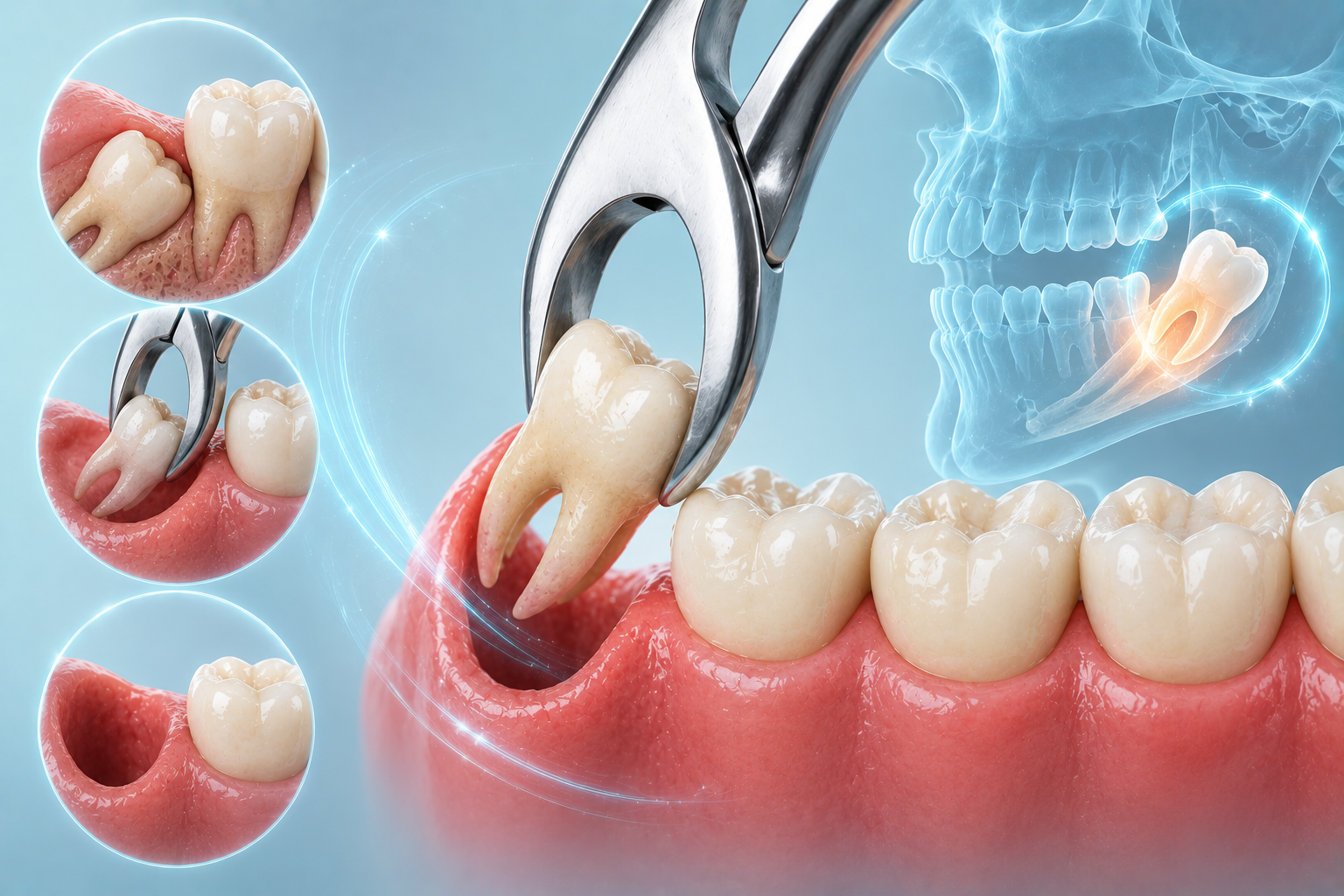
What Happens During Wisdom Tooth Removal?
If extraction is needed, the procedure will depend on the tooth's position and complexity.
Treatment may involve:
Local anaesthetic
Sedation where appropriate
Simple extraction or surgical removal
For impacted teeth beneath the gum or bone, a minor surgical procedure may be necessary.
Your dentist or oral surgeon will explain the process before treatment begins.
Recovery After Wisdom Tooth Removal
Recovery varies between individuals, but most patients experience temporary symptoms such as:
Mild swelling
Minor discomfort
Jaw stiffness
Slight bleeding
Helpful recovery advice includes:
✔ Rest after treatment
✔ Follow prescribed aftercare instructions
✔ Avoid smoking
✔ Eat soft foods initially
✔ Maintain good oral hygiene carefully
Most patients gradually return to normal activities within several days.
When Should You See a Dentist?
You should arrange a dental examination if you experience:
Persistent wisdom tooth pain
Swelling around the gums
Difficulty chewing
Jaw discomfort
Repeated infections
Difficulty opening your mouth
Early diagnosis can often help prevent more complex dental issues.
Final Thoughts
Impacted wisdom teeth are a common dental condition that occurs when wisdom teeth cannot fully emerge into the mouth. While some remain harmless, others may cause pain, infection, damage to neighbouring teeth, or other oral health complications.
Understanding the symptoms and seeking professional assessment early can help protect your long-term oral health and ensure the most appropriate treatment approach.
Book Your Consultation
At Euro Dental Care, we provide comprehensive assessments and personalised treatment for wisdom tooth concerns. Our experienced dental team uses modern diagnostic techniques to evaluate impacted wisdom teeth and recommend the most suitable treatment for your oral health needs.
Whether you are experiencing discomfort, swelling, or simply want reassurance about your wisdom teeth, we are here to help.
Book your consultation with Euro Dental Care today and receive professional guidance for a healthier, more comfortable smile.