
What to Do in a Dental Emergency
Dental emergencies can occur suddenly and often require immediate attention. Severe tooth pain, a knocked-out tooth, or unexpected swelling in the gums can be both painful and alarming. In these situations, knowing what to do during a dental emergency can make a significant difference in protecting your teeth and preventing further complications.
Taking the right steps quickly can help reduce pain, minimise damage, and increase the chances of saving a damaged or knocked-out tooth. Prompt professional care from an emergency dentist is often essential to address the problem safely and effectively.
In this guide, we explain the most common types of dental emergencies, the immediate first aid steps you should take, when to contact an emergency dentist, and practical tips to help prevent urgent dental problems in the future.
Types of Dental Emergencies
While some dental problems can wait for a routine appointment, others require immediate attention from an emergency dentist. Recognising the signs of a dental emergency is essential for preventing further damage, relieving pain, and protecting your oral health.
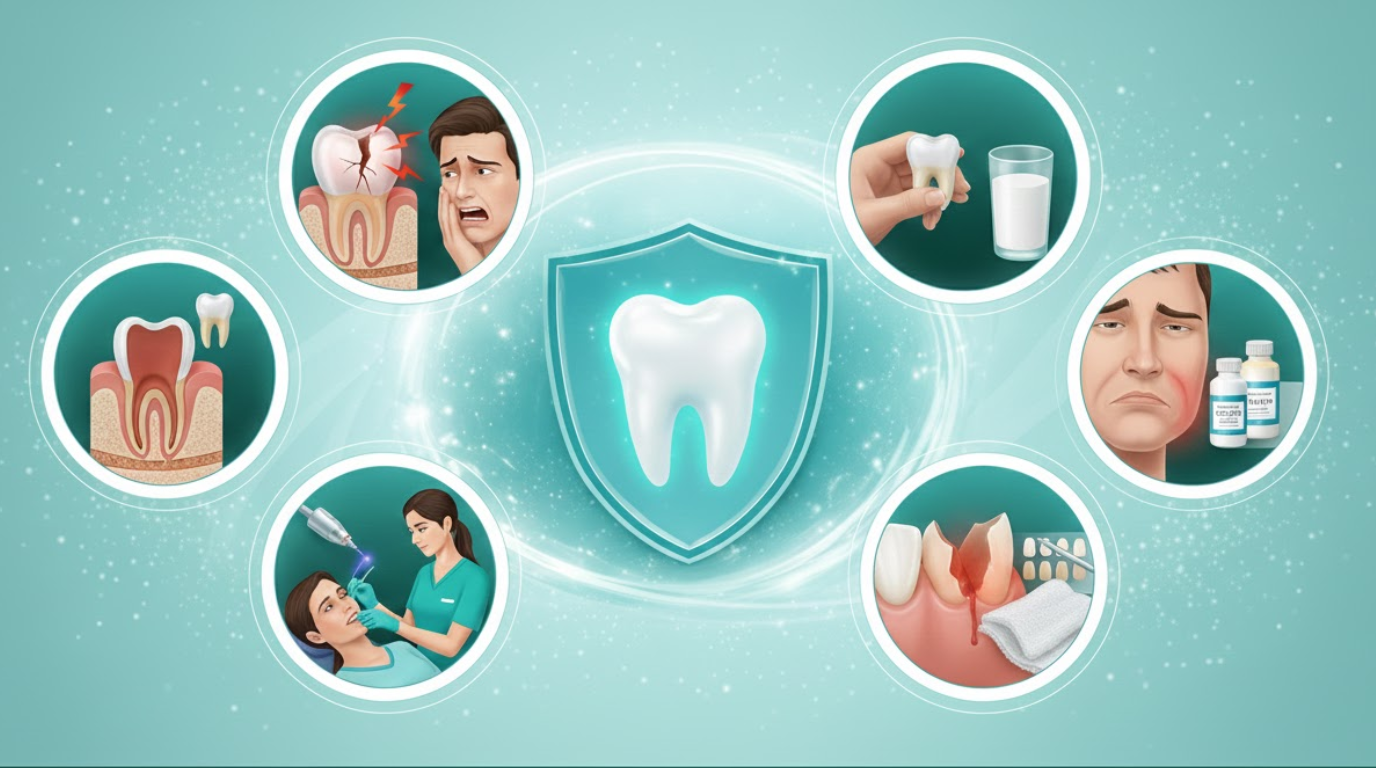
Dental Emegercies
Below are some of the most common dental emergencies that require urgent dental care.
Severe Toothache
A severe or persistent toothache is often a sign of an underlying dental problem, such as tooth decay, infection, or a dental abscess. Tooth pain should never be ignored, especially if it is accompanied by swelling, fever, or difficulty chewing. Prompt evaluation by a dentist is important to identify the cause and provide appropriate treatment.
Knocked-Out Tooth
A knocked-out tooth (also known as an avulsed tooth) is considered a true dental emergency. Immediate action is crucial, as quick treatment may allow the dentist to successfully reinsert and save the tooth.
Broken or Chipped Tooth
A broken, cracked, or chipped tooth can expose the inner layers of the tooth, increasing the risk of pain, sensitivity, and infection. Even minor damage should be assessed by a dentist to prevent further complications.
Lost Filling or Dental Crown
If a filling or dental crown becomes loose or falls out, the underlying tooth may become exposed and vulnerable to sensitivity, decay, and further damage. Seeking prompt dental care can help restore the tooth and prevent additional problems.
Dental Abscess
A dental abscess is a serious infection that occurs when bacteria accumulate in the tooth or surrounding gum tissue. Symptoms may include severe pain, swelling, fever, and a persistent bad taste in the mouth. Because the infection can spread to other areas of the body, immediate dental treatment is essential.
Immediate First Aid Tips for Common Dental Emergencies
Knowing how to respond quickly during a dental emergency can help reduce pain, prevent further damage, and improve the chances of saving a damaged tooth. While these first aid measures can provide temporary relief, it is important to seek professional care from an emergency dentist as soon as possible.
Below are some immediate steps you can take for common dental emergencies before reaching a dental clinic.
What to Do for a Severe Toothache
A severe toothache may indicate infection, tooth decay, or a dental abscess. Taking the following steps may help relieve discomfort temporarily:
Rinse your mouth with warm salt water to help reduce bacteria and inflammation
Gently floss between the teeth to remove any trapped food particles or debris
Apply a cold compress to the outside of the cheek to reduce swelling
Avoid placing aspirin directly on the gums, as this may irritate the soft tissue
If the pain persists or worsens, contact your emergency dentist for a professional evaluation.
What to Do for a Knocked-Out Tooth
A knocked-out tooth (avulsed tooth) requires immediate attention. Acting quickly can significantly increase the chances of saving the tooth.
Pick up the tooth by the crown (top part), not the root
Rinse it gently with water if it is dirty, but do not scrub or remove attached tissue
Try to place the tooth back into its socket if possible
If reinsertion is not possible, store the tooth in milk or saliva to keep it moist
Seek emergency dental care immediately
Time is critical in these situations. Ideally, the tooth should be treated by a dentist within 30 to 60 minutes.
What to Do for a Broken or Chipped Tooth
A broken tooth can expose the inner layers of the tooth and cause sensitivity or pain.
Rinse your mouth with warm water to clean the area
Apply a cold compress to the outside of the cheek to minimise swelling
Save any broken fragments of the tooth, if possible
Avoid chewing on the affected side until you see a dentist
Prompt treatment can help prevent further damage and restore the tooth.
What to Do for a Lost Dental Crown
If a dental crown becomes loose or falls out, the underlying tooth may become sensitive or vulnerable to damage.
Keep the crown in a safe place and bring it with you to your dental appointment
Avoid chewing on the exposed tooth
Contact your dentist as soon as possible to have the crown reattached or replaced
Although these steps can help manage the situation temporarily, professional dental treatment is essential to fully address the problem and protect your oral health.
When Should You Call an Emergency Dentist?
Knowing when to seek emergency dental care is essential for protecting your teeth and preventing more serious complications. While some dental problems can wait for a routine appointment, certain symptoms require immediate attention from an emergency dentist.
You should contact an emergency dentist as soon as possible if you experience:
Severe or worsening tooth pain that does not improve with basic care
Swelling in the face, jaw, or gums, which may indicate infection
Bleeding that does not stop after applying pressure
A knocked-out permanent tooth, which requires urgent treatment
Signs of infection, such as fever, swelling, or difficulty swallowing
Delaying urgent dental care can allow the problem to worsen and may lead to more complex treatments and higher treatment costs. Seeking prompt care often allows dentists to provide simpler, more effective treatment and improve the chances of saving the affected tooth.
How to Prevent Dental Emergencies
Although not all dental emergencies can be avoided, many can be prevented through good oral hygiene practices and regular preventive dental care. Taking proactive steps to protect your teeth and gums can significantly reduce the risk of sudden dental pain, injury, or infection.
Preventive Tips to Reduce Dental Emergencies
To help protect your oral health and minimise the risk of urgent dental problems, consider the following preventive measures:
Attend regular dental check-ups and professional cleanings to detect and treat problems early
Maintain good oral hygiene habits, including brushing twice daily and flossing every day
Wear a mouthguard during contact sports to protect your teeth from injury
Avoid chewing hard objects, such as ice, hard sweets, or pen caps, which can crack or damage teeth
Address minor dental issues promptly, such as small cavities or loose fillings, before they develop into more serious problems
Routine preventive dental care plays a vital role in protecting your teeth and gums. By maintaining regular dental visits and practising proper oral hygiene, you can greatly reduce the likelihood of experiencing unexpected dental pain, injury, or emergency dental treatment.
Do Not Ignore a Dental Emergency
A dental emergency should never be ignored. Without prompt treatment, dental problems can quickly worsen, leading to increased pain, infection, and potential long-term damage to your teeth and gums. Acting quickly during a dental emergency can help relieve discomfort, protect your oral health, and increase the chances of saving an affected tooth.
Whether you are experiencing a severe toothache, a broken or chipped tooth, or a knocked-out tooth, seeking professional care from an emergency dentist is essential. Early treatment allows your dentist to address the problem effectively and prevent further complications that may require more complex procedures.
Frequently Asked Questions (FAQs)
-
A dental emergency typically involves severe pain, swelling, uncontrolled bleeding, infection, or trauma to the teeth or gums. Situations such as a knocked-out tooth, severe toothache, broken tooth, or dental abscess often require urgent dental care from an emergency dentist.
-
You should seek emergency dental treatment immediately. Ideally, a knocked-out tooth should be treated within 30 to 60 minutes to improve the chances of successfully saving and reattaching the tooth.
-
In most cases, it is best to contact an emergency dentist first. However, you should visit the emergency room immediately if you experience:
Difficulty breathing or swallowing
Severe facial swelling
Uncontrolled bleeding
These symptoms may indicate a serious medical emergency that requires immediate hospital care.
-
Although tooth pain may temporarily improve, the underlying cause—such as tooth decay, infection, or an abscess—usually remains. Without professional treatment, the condition may worsen and lead to more serious dental complications.
-
To temporarily relieve dental pain before seeing your dentist, you can:
Rinse your mouth with warm salt water
Apply a cold compress to the outside of your cheek to reduce swelling
Take over-the-counter pain medication as directed
These measures may help manage discomfort, but they should not replace professional dental care.
-
The cost of emergency dental treatment varies depending on the type and severity of the dental problem. However, seeking prompt care often prevents the issue from worsening and may help avoid more complex and costly procedures in the future.
Need Immediate Help?
Book an Emergency Dental Appointment
Experiencing severe tooth pain, swelling, or a dental injury? Do not delay seeking professional care. Prompt treatment from an emergency dentist can help relieve pain, prevent infection, and increase the chances of saving a damaged or knocked-out tooth.
If you are facing a dental emergency, contact our clinic immediately to arrange an urgent emergency dental appointment. Our experienced dental team is committed to providing fast, compassionate care to restore your comfort and protect your oral health.